1.Waste Apple
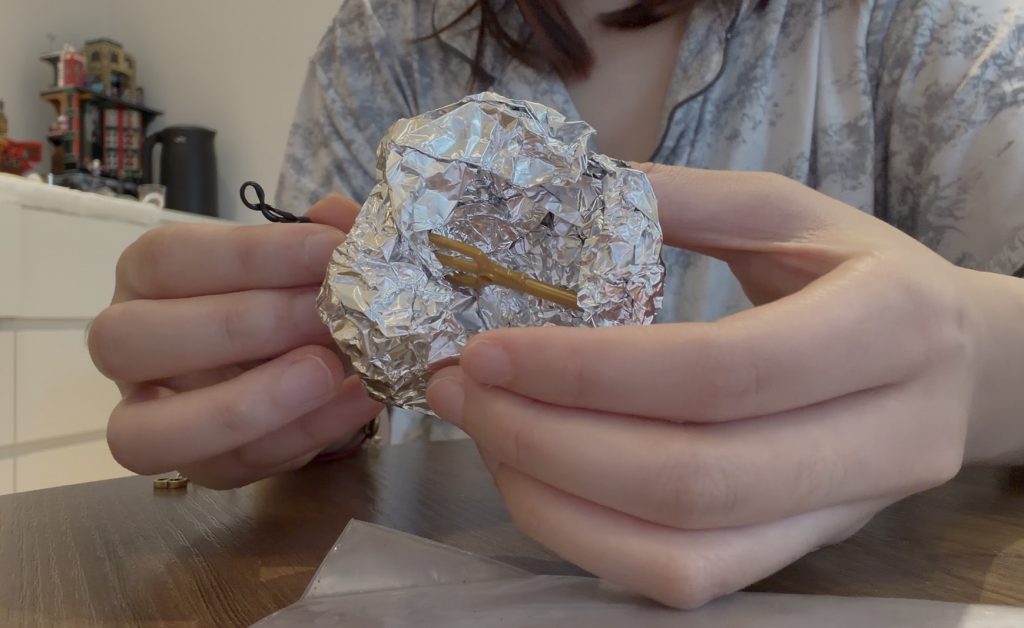
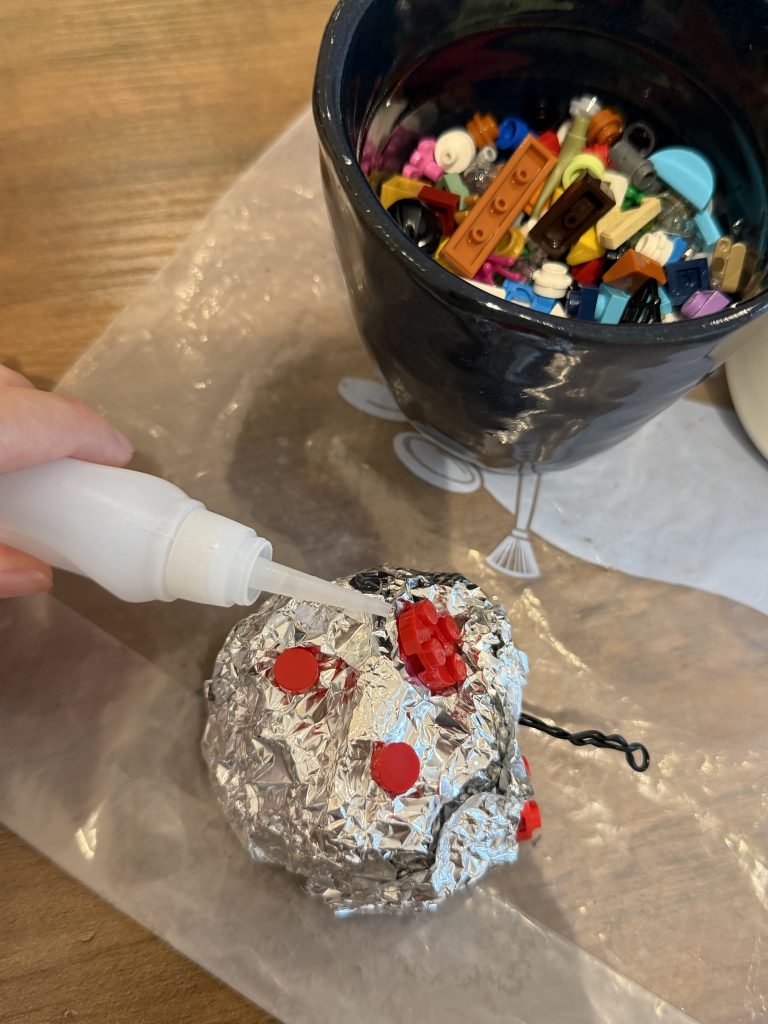
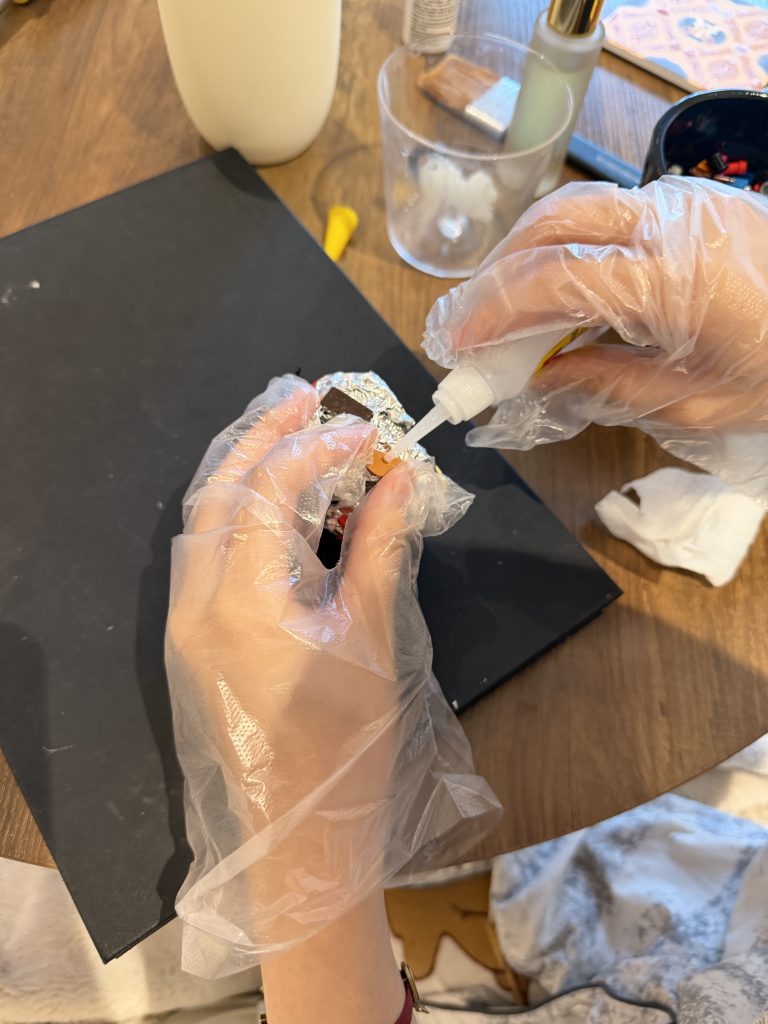
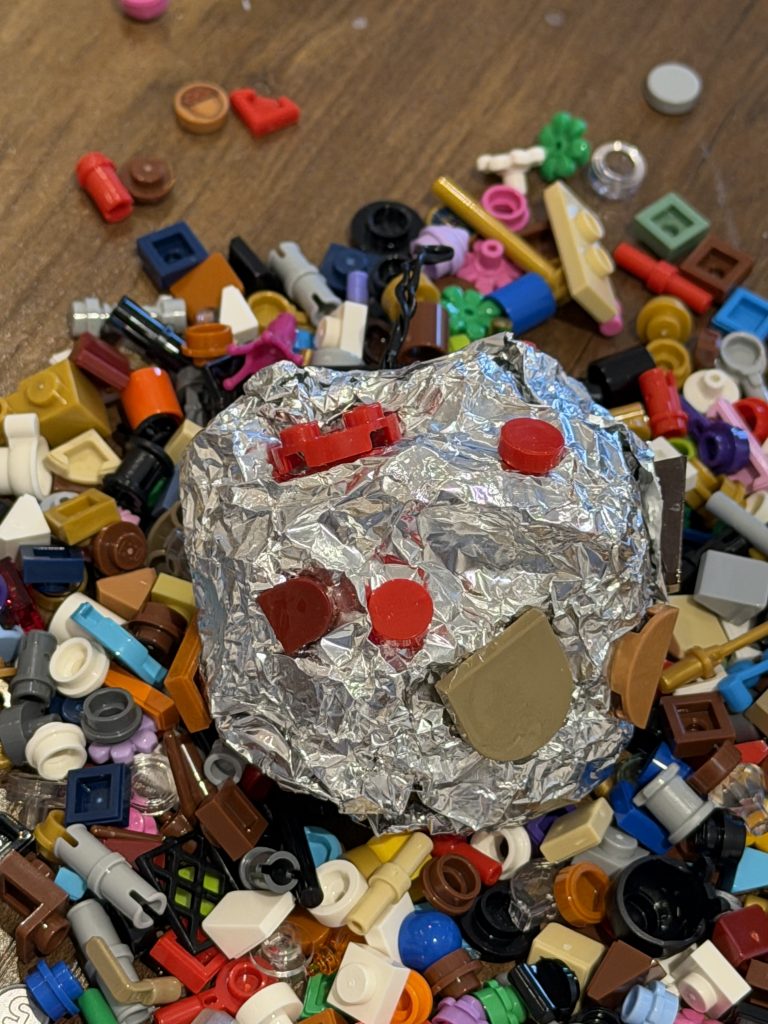
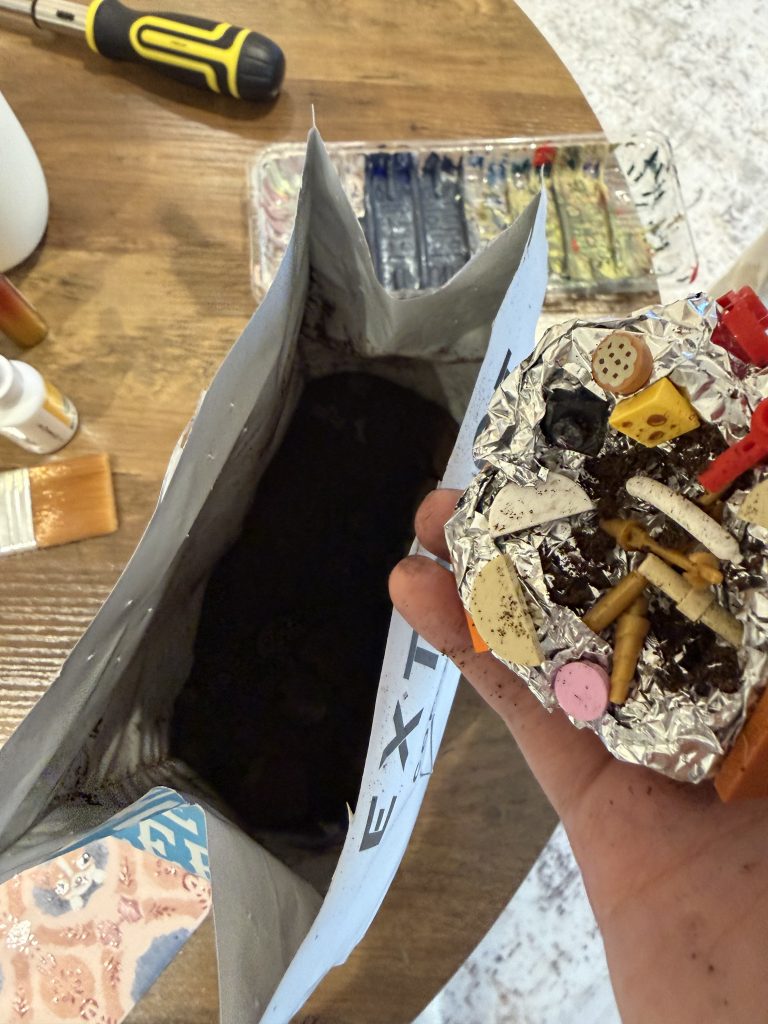
Following my tutor’s suggestion to step away from traditional sculpted forms and lean into everyday randomness, I developed a new physical iteration using household waste and found objects. Instead of controlling the material to achieve an ideal shape, I allowed the raw friction and logic of discarded items to dictate the apple’s structure.
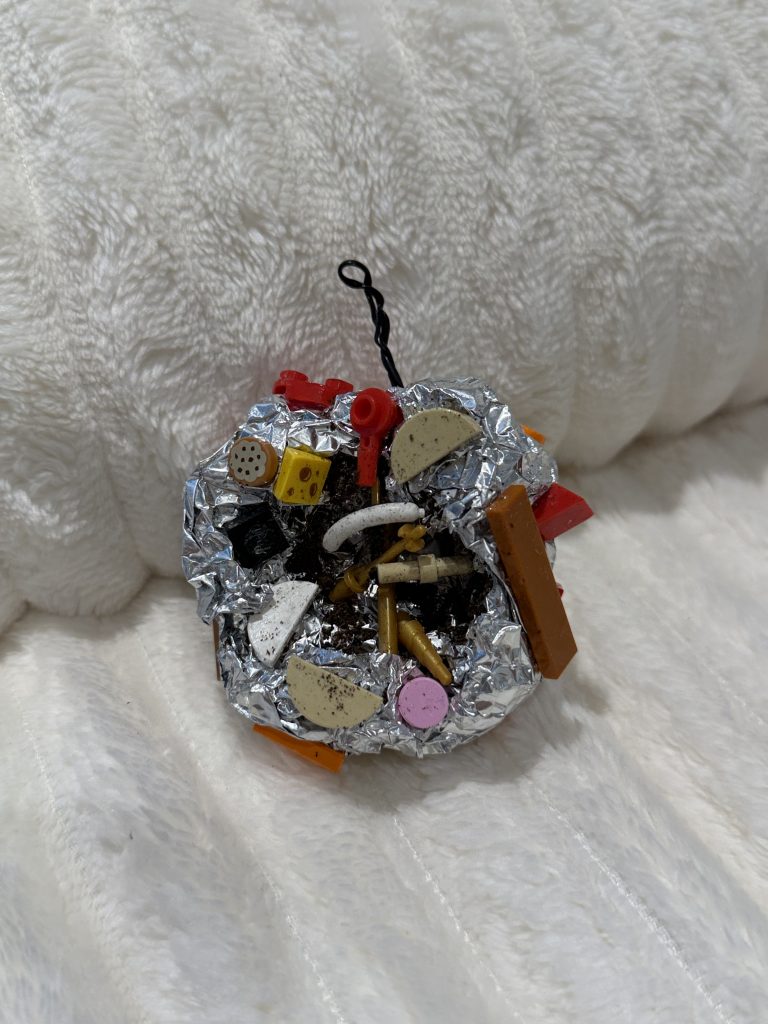
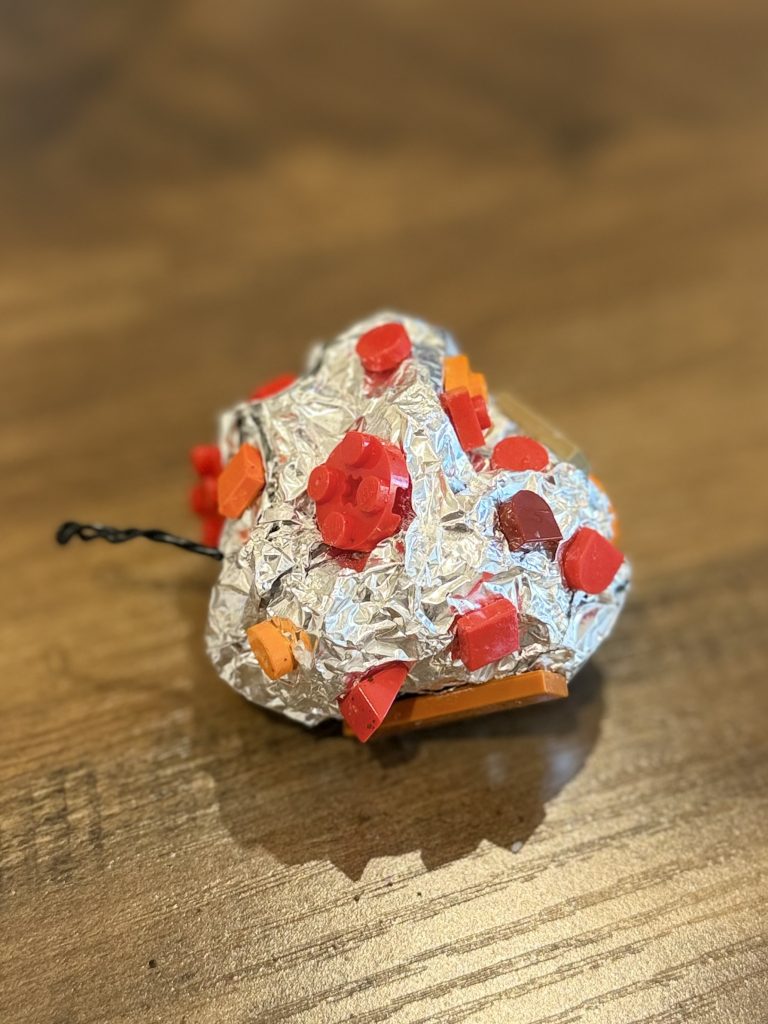
Thinking & Material Sourcing: 30 mins
Foil Base Shaping: 15 mins
Searching for Lego Parts: 20 mins
Lego Assembly & Attachment: 1 hour
Adding Coffee Grounds: 5 mins
Total Time: 2 Hours 10 Minutes
2. Real Apple
For the next iteration, I Following peers feedback, I bought real apples to replicate the form. However, instead of a natural core, I decided to build the internal skeleton using household waste—specifically dental floss and cotton swabs.
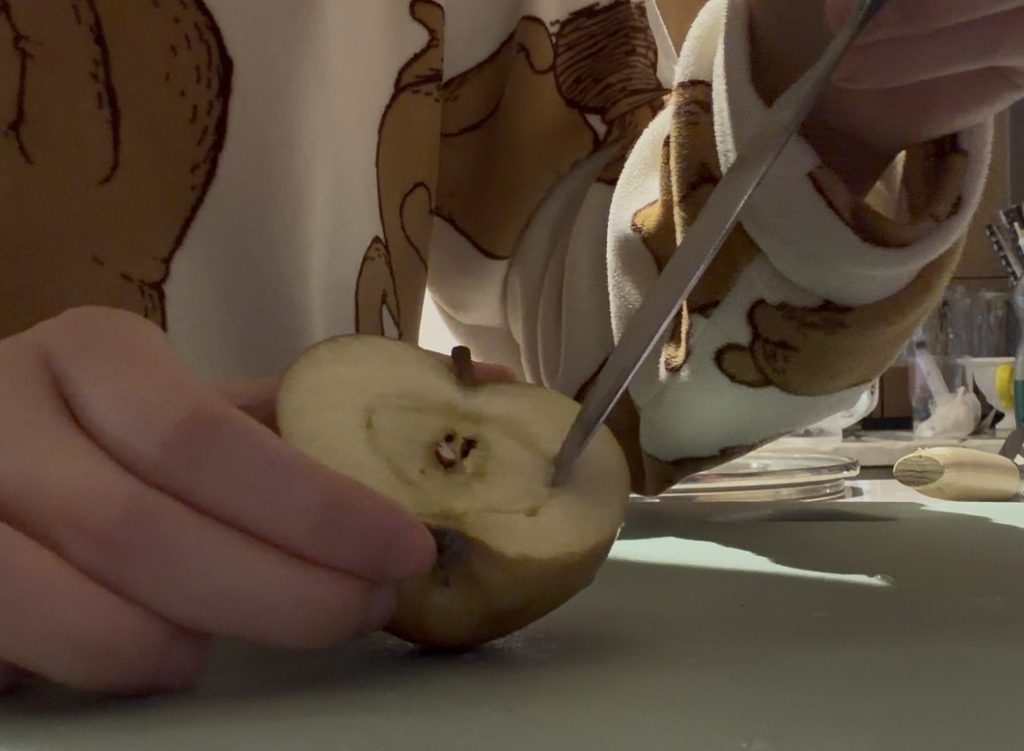
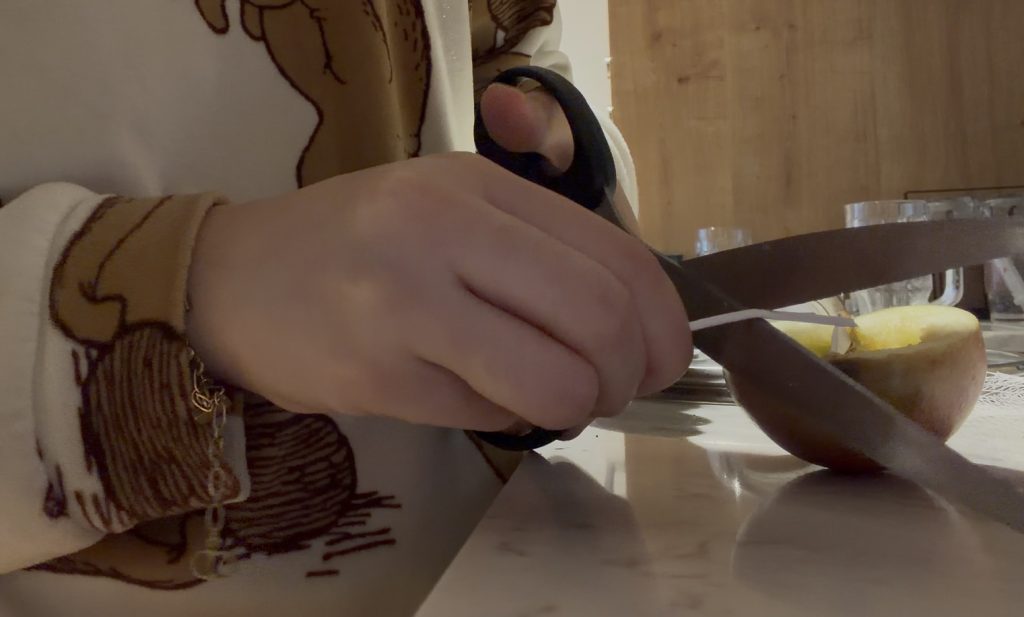
Buying Real Apples: 40 mins
Hollowing / Carving the Apple: 10 mins
Sourcing & Processing Waste: 15 mins
Assembling the Waste Skeleton: 10 mins
Total Time: 1 Hour 15 Minutes
3. Photographic Apple
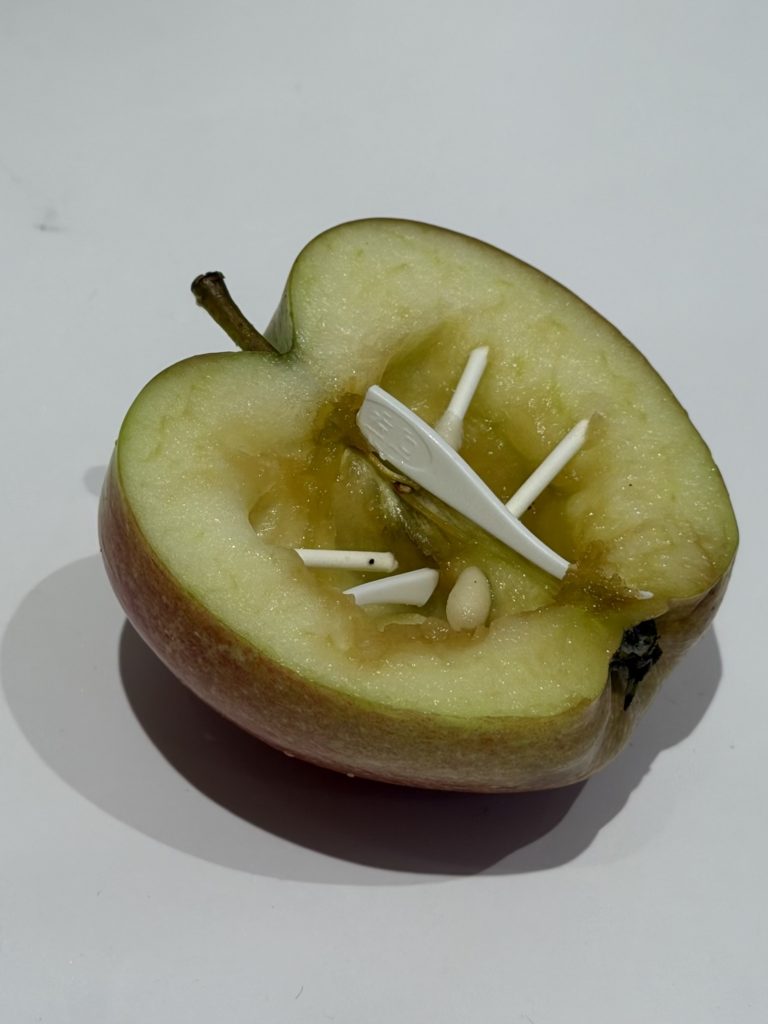
Finding Angles & Setting Up Lighting: 5 mins
Photography & Final Shots: 2 mins
Total Time: 7 Minutes
4.Scanned Apple
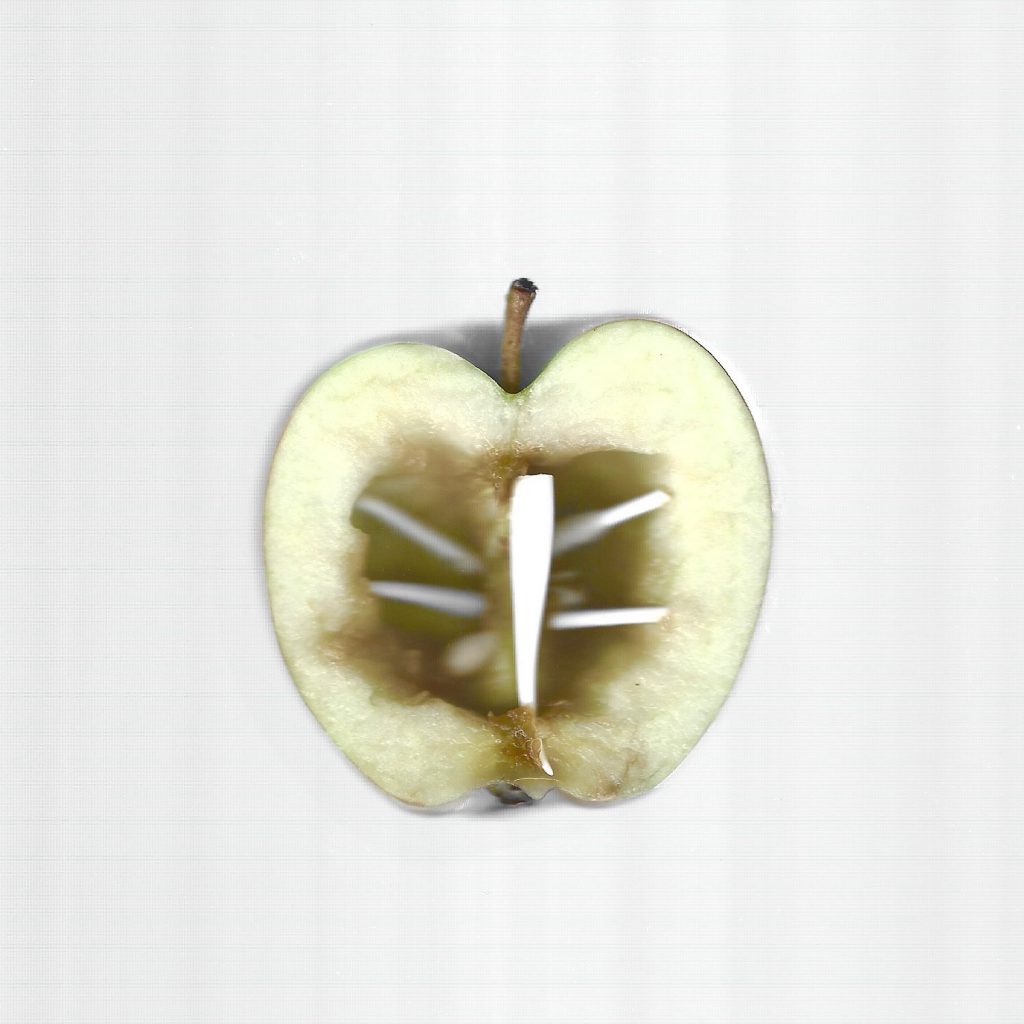
Positioning on Scanner: 1 min
Scanning & File Exporting: 3 mins
Total Time: 4 Minutes
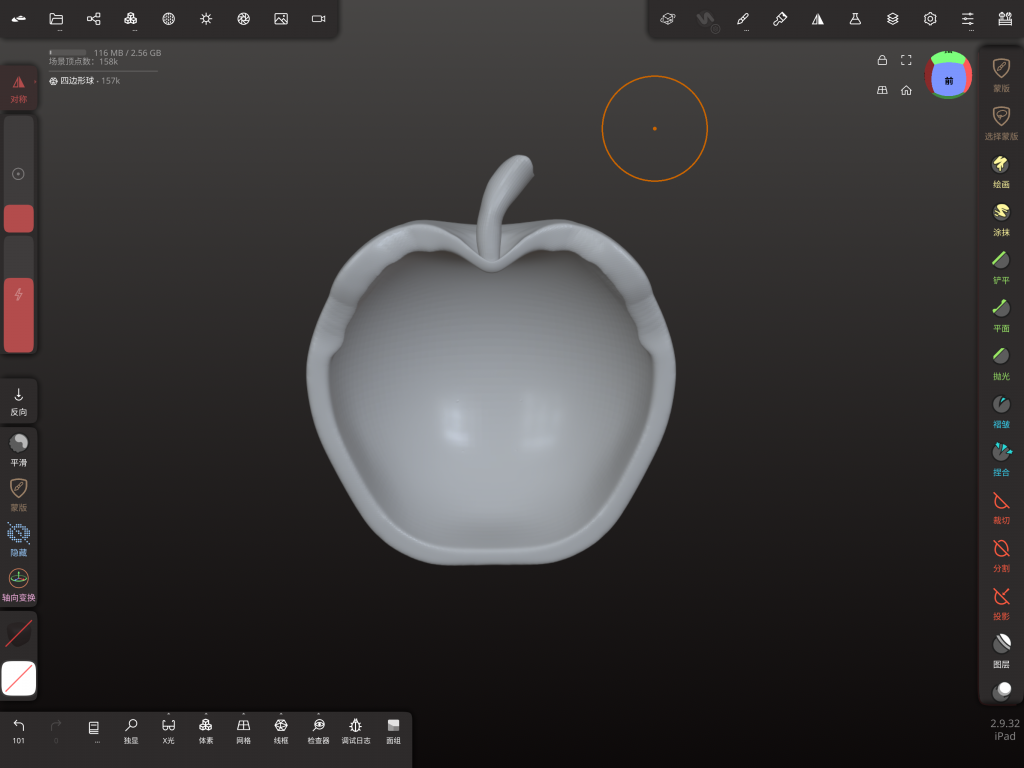
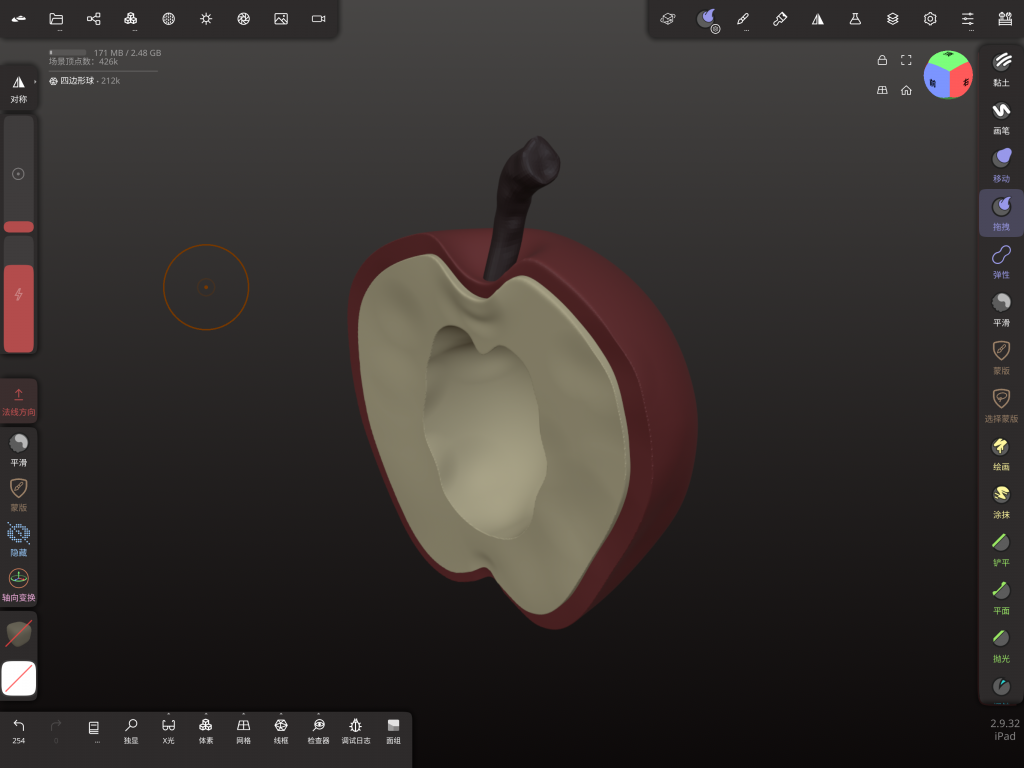
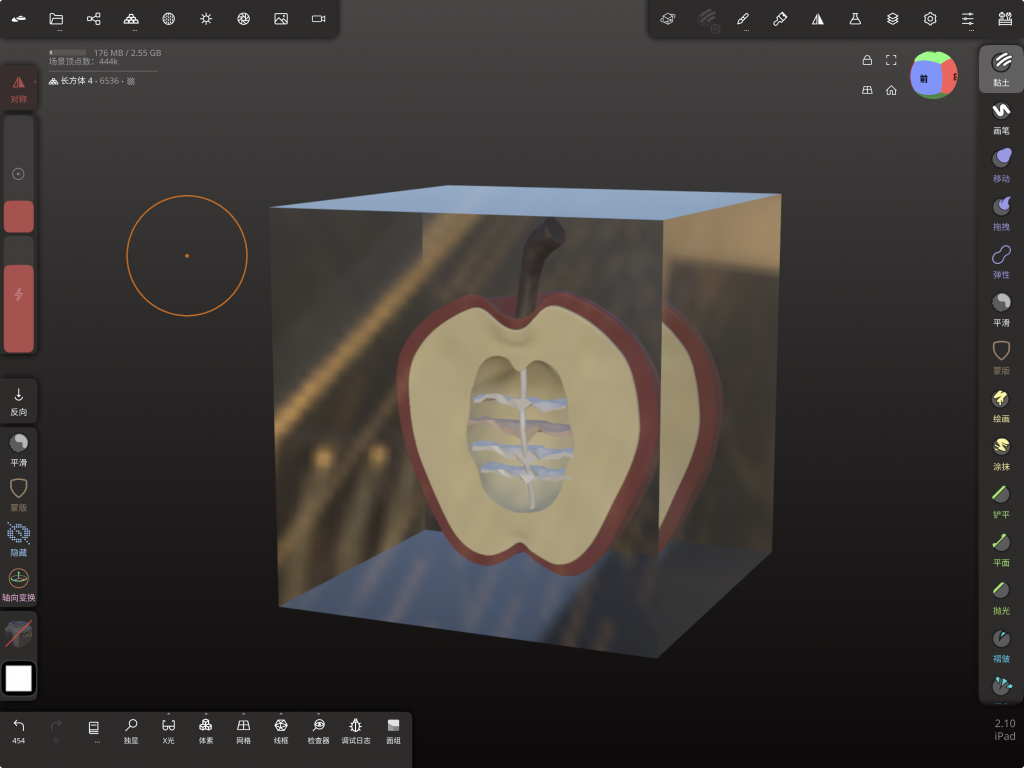
5. 3D Modeled Apple
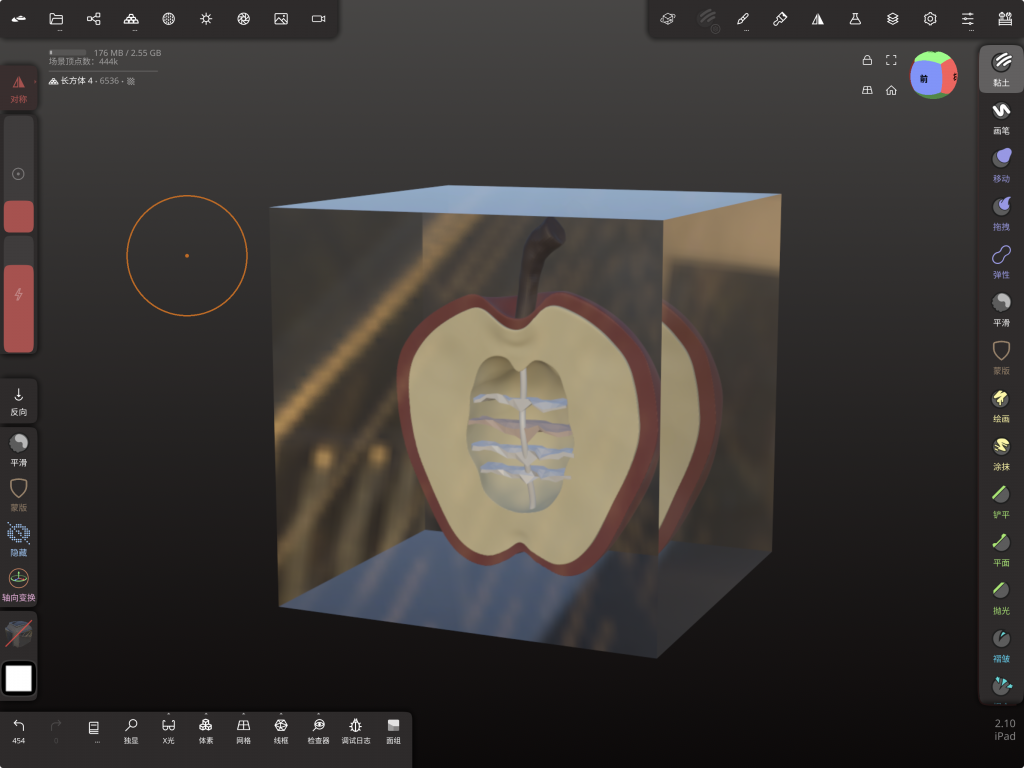
Polygon Base Mesh: 20 mins
Procedural Material & Lighting: 5 mins
Total Time: 25 Minutes
6. Code Apple
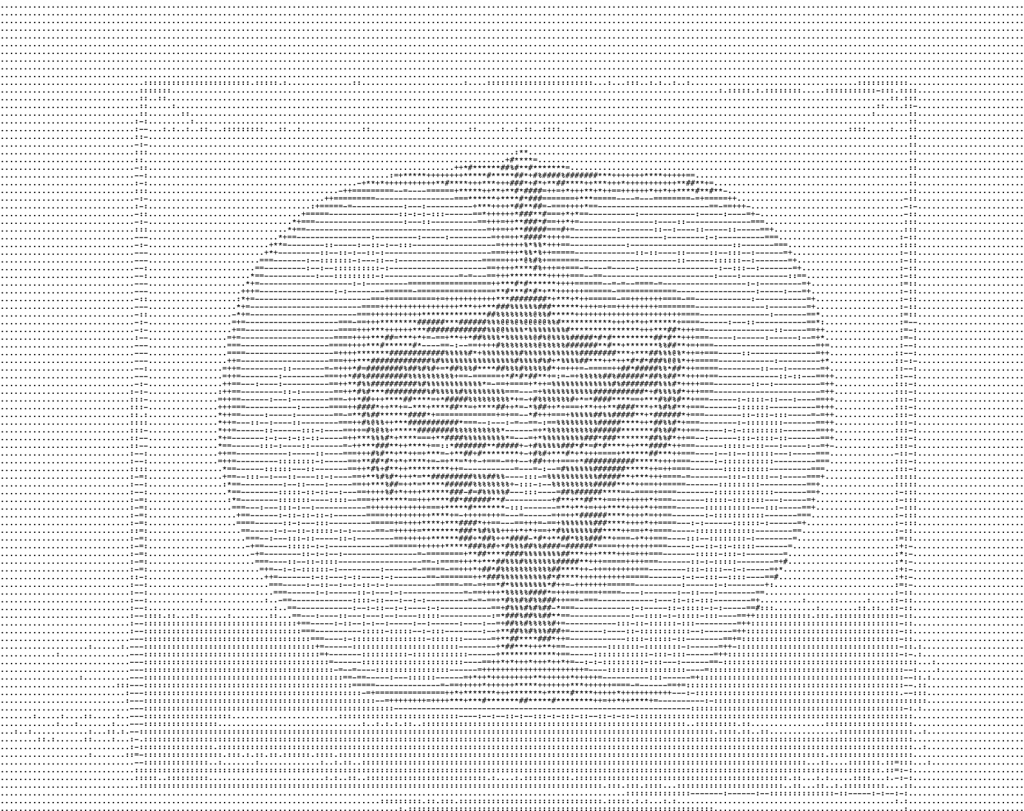
Uploading Image to Code Generator: 2 mins
Generating & Exporting Code File: 1 min
Total Time: 3 Minutes
7. Digital Collage Apple
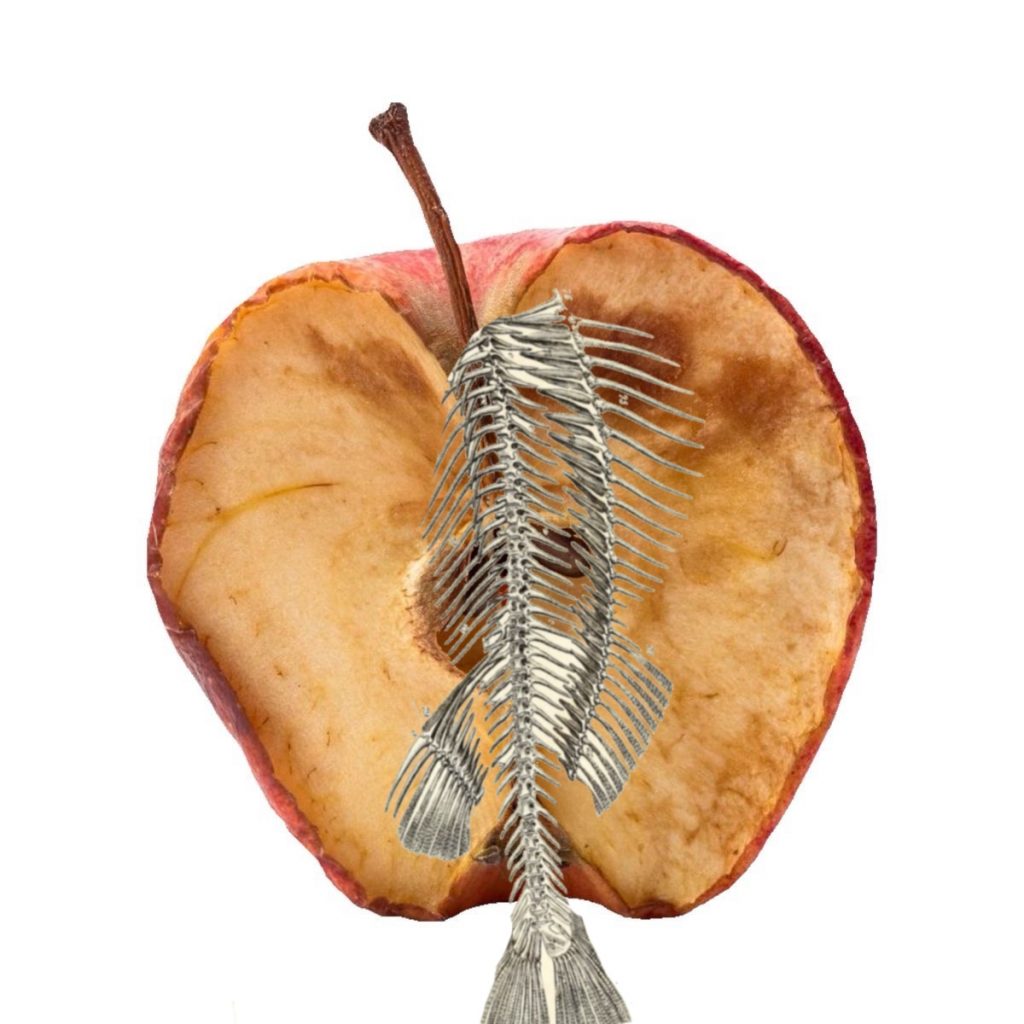
Sourcing Digital Assets & Cutouts: 5 mins
Digital Assembly & Layering: 5 mins
Total Time: 10 Minutes
8.AI Apple
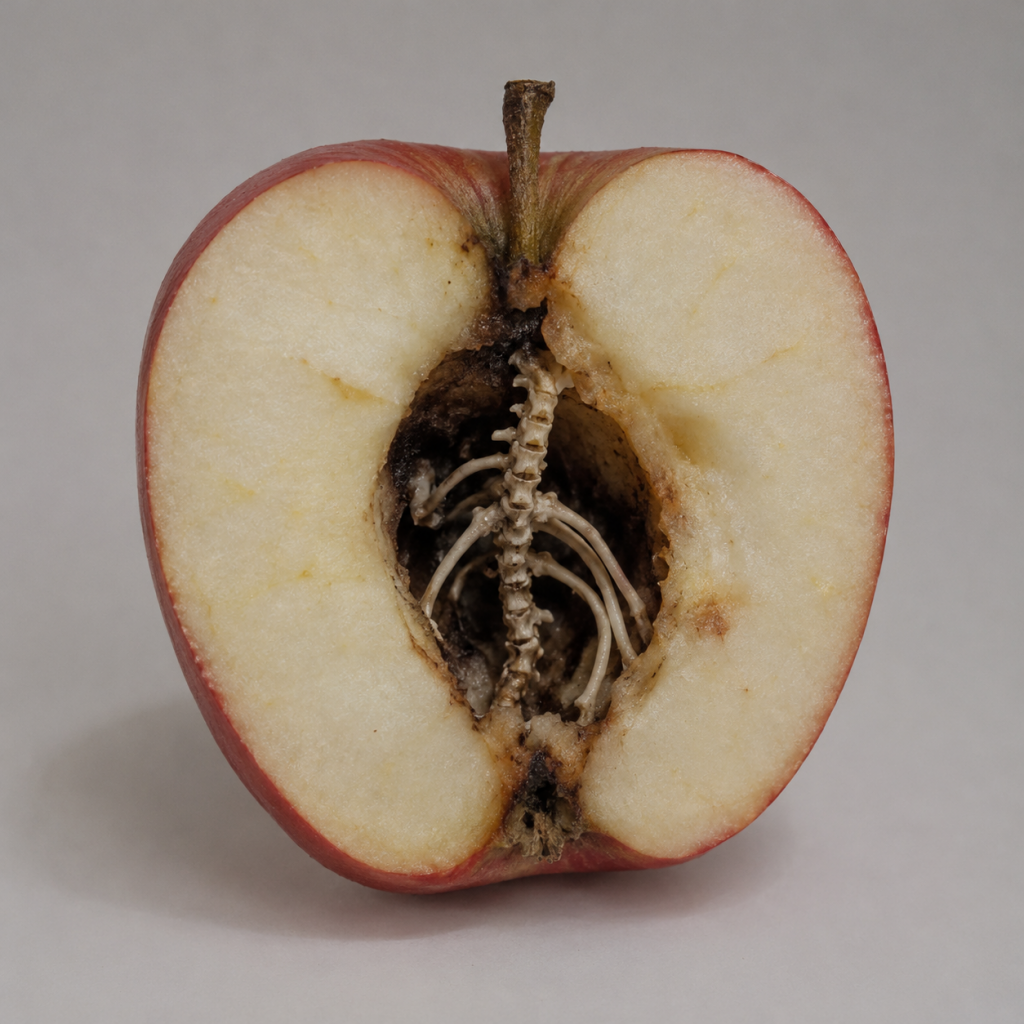
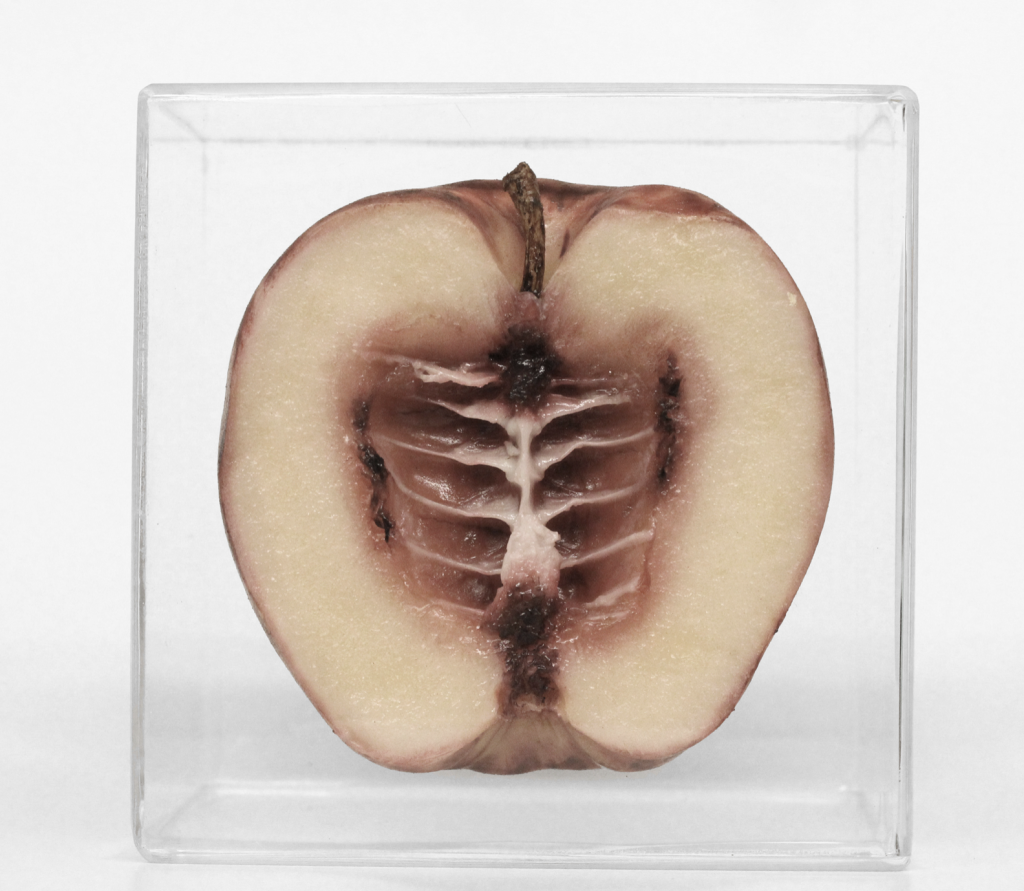
Type in Prompt 3 minutes : Help me generate the cross-section of half an apple. The centre was hollowed out and a little black as if it was broken, and the skeleton of the creature grew out of the apple core.
9. AI Apple (2)
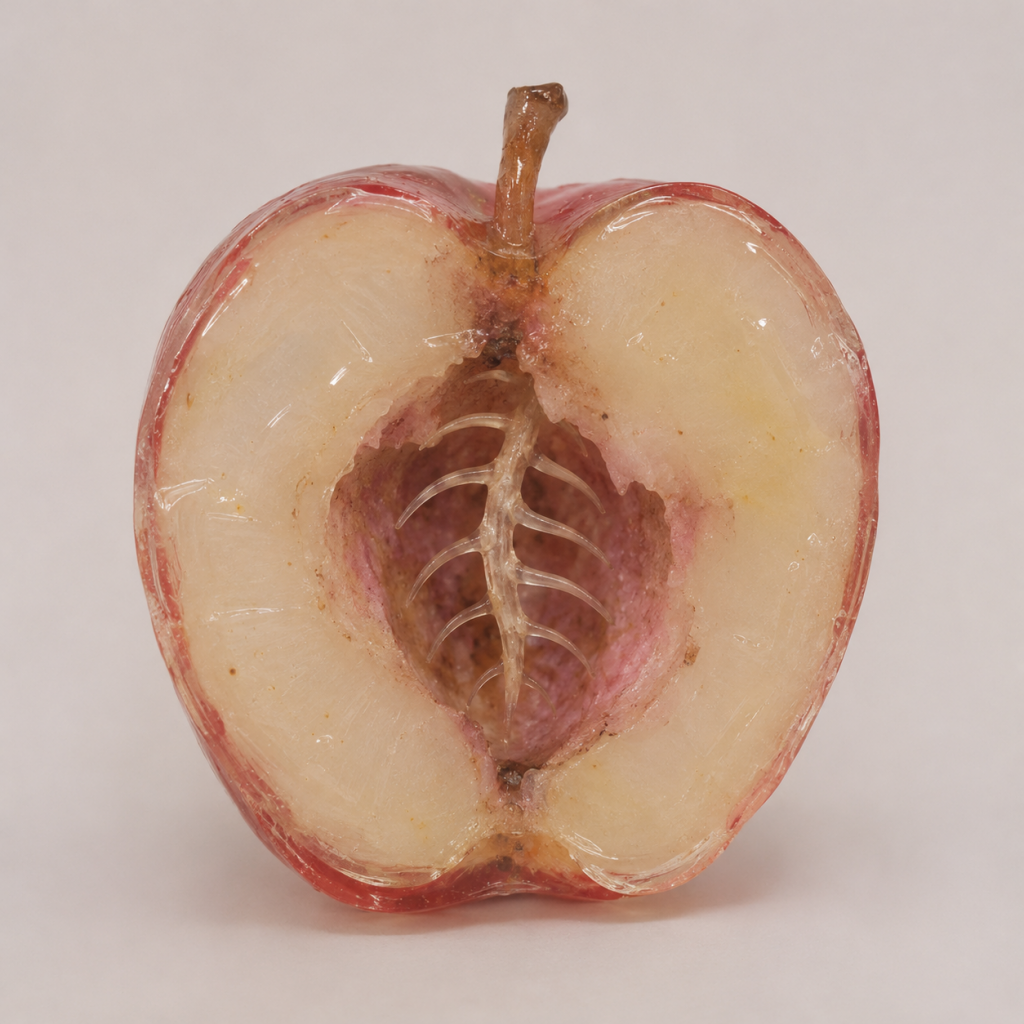
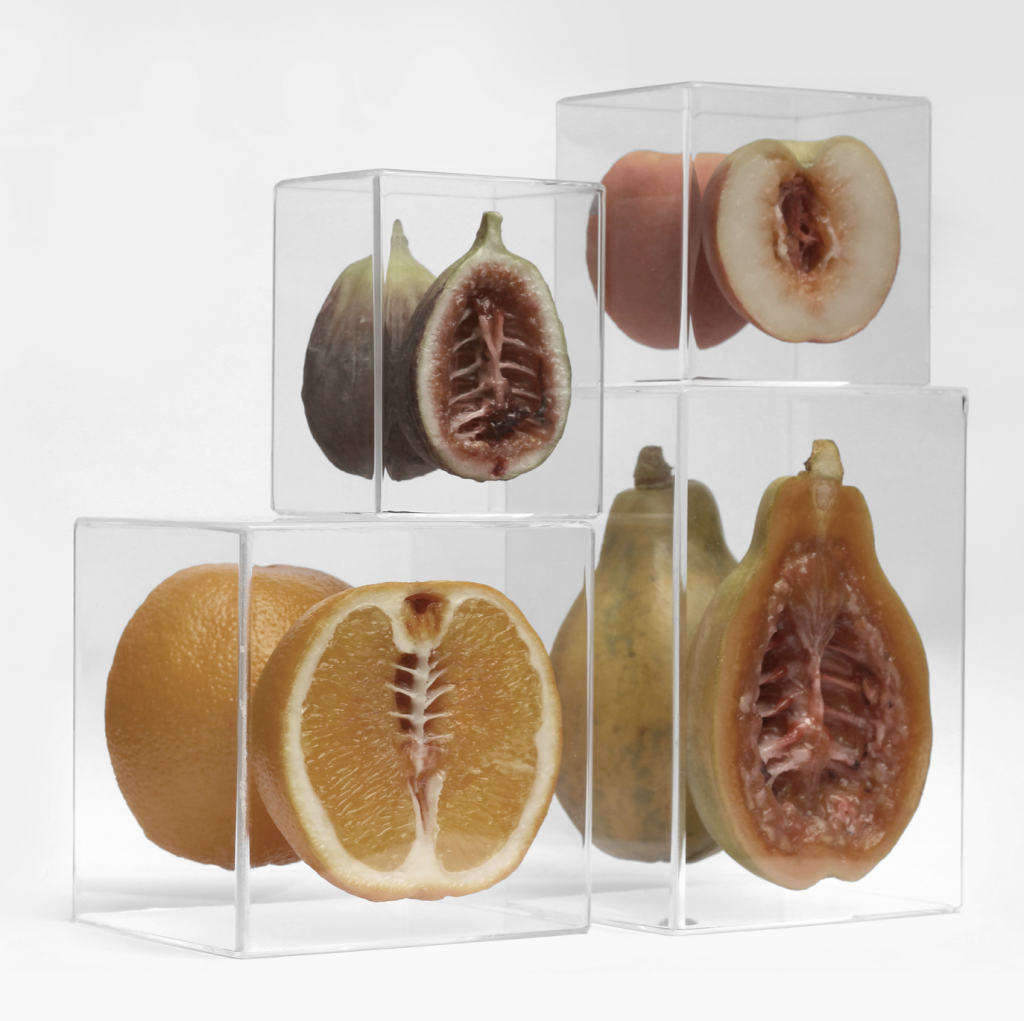
Type in Prompt 2 minutes : You don’t need such a real apple, but an apple model made of acrylic. If you want to look like an acrylic model made of a real apple, the hole in the middle can also be dark pink, like oxidised, and the bones grown are more like fish bones, not so many joints.
10. AI Apple (3)
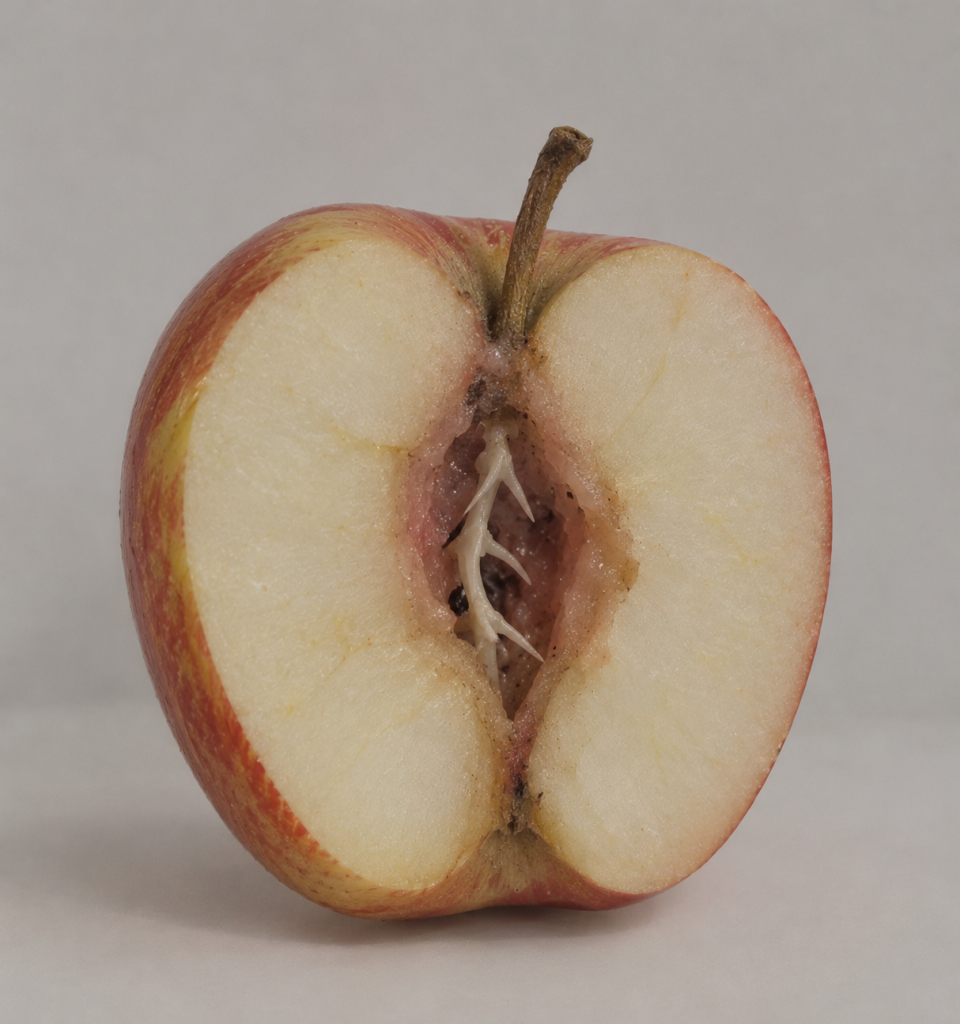
Type in Prompt 1 minute : Don’t be so shiny. The outer skin of the apple is more like the real fruit lines. The hole in the middle can be shallower, and the bones are embedded in it to reveal part of it.
Draft
How does the limitations of physical manufacturing expose the boundary between tactile reality and digital perfection?
When we observe things in the real world, we don’t just look at them with our eyes, but also perceive them through touch, smell, etc.
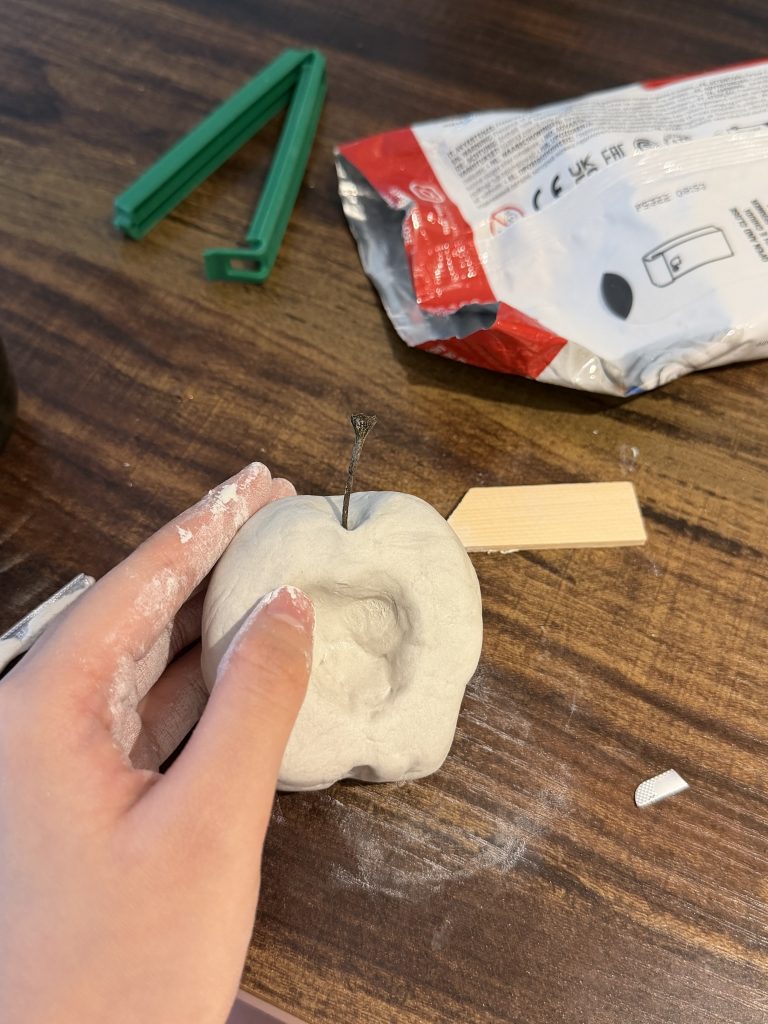
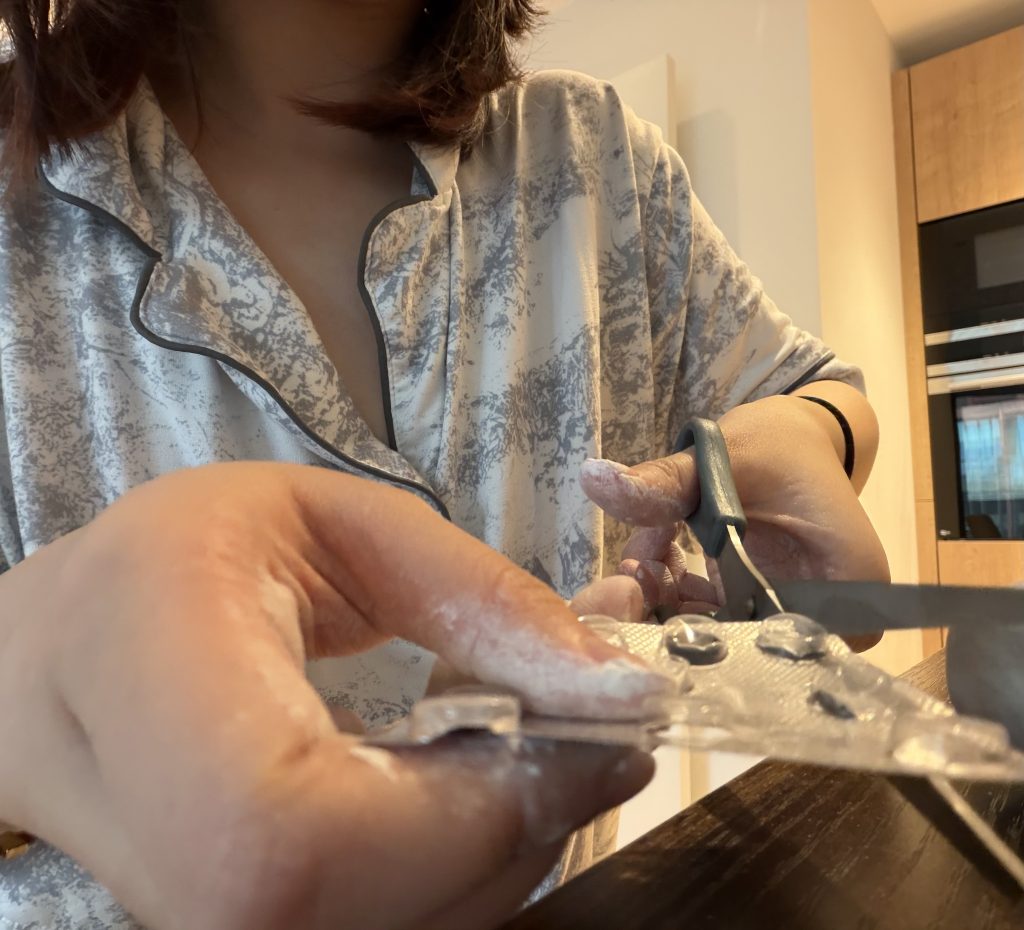
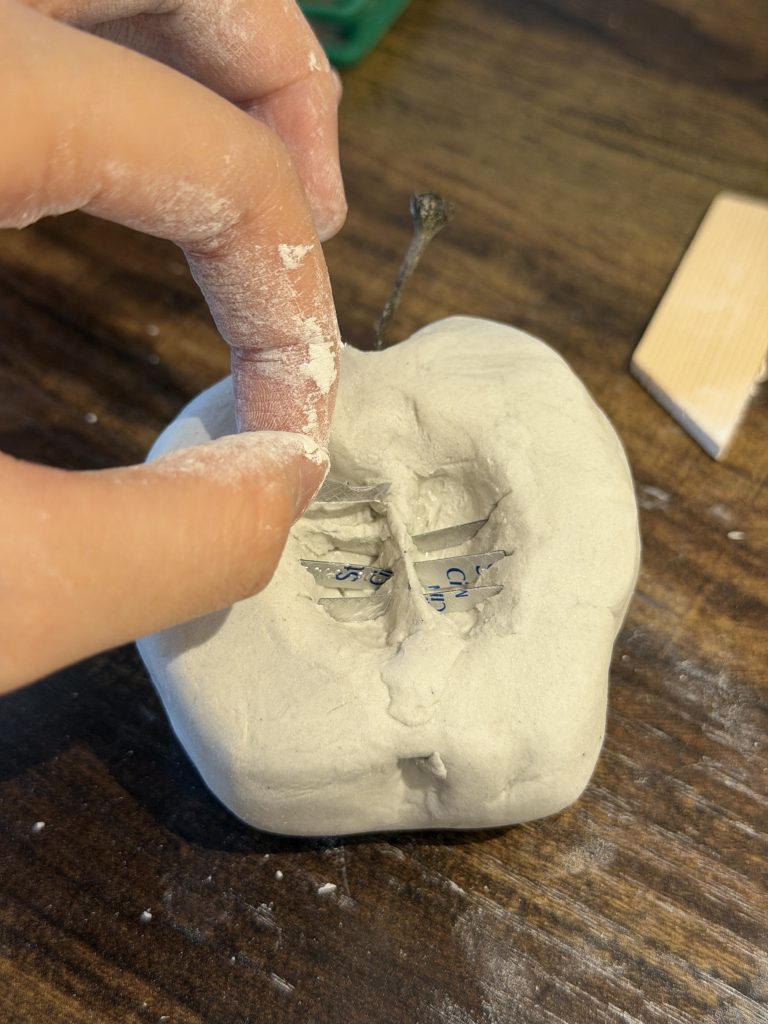
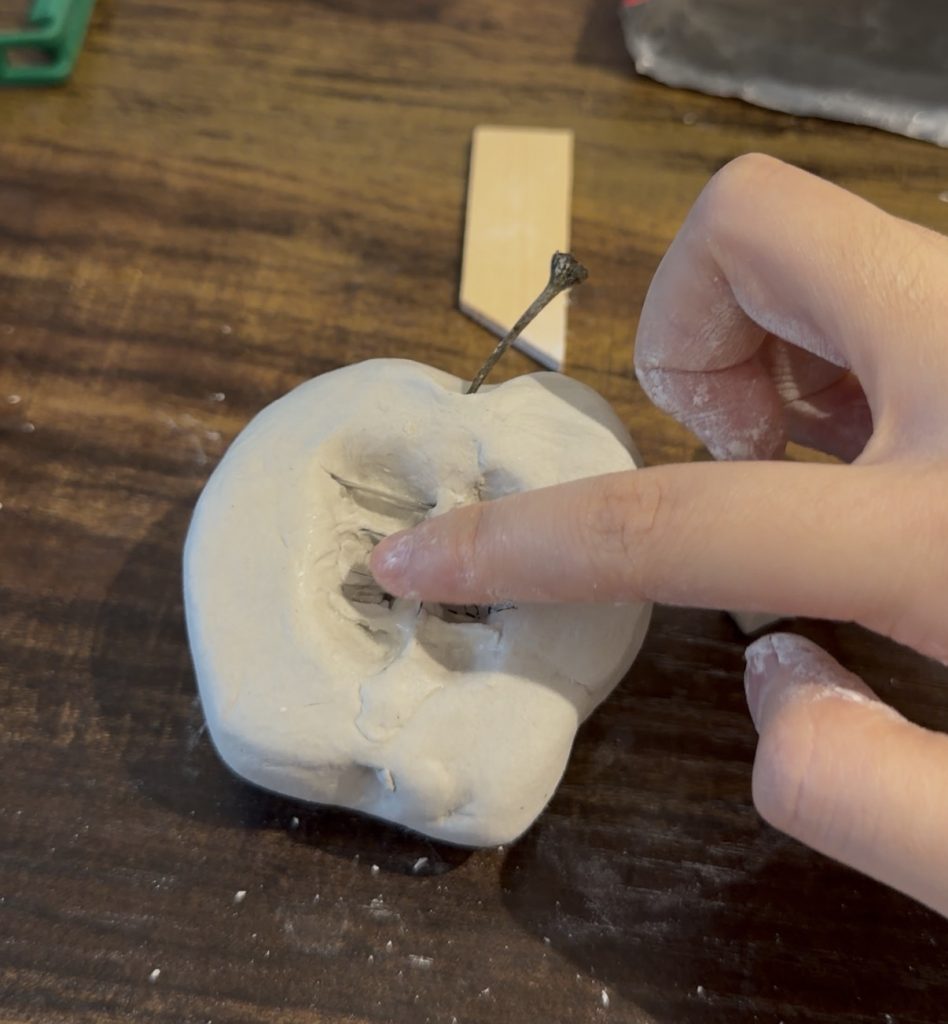
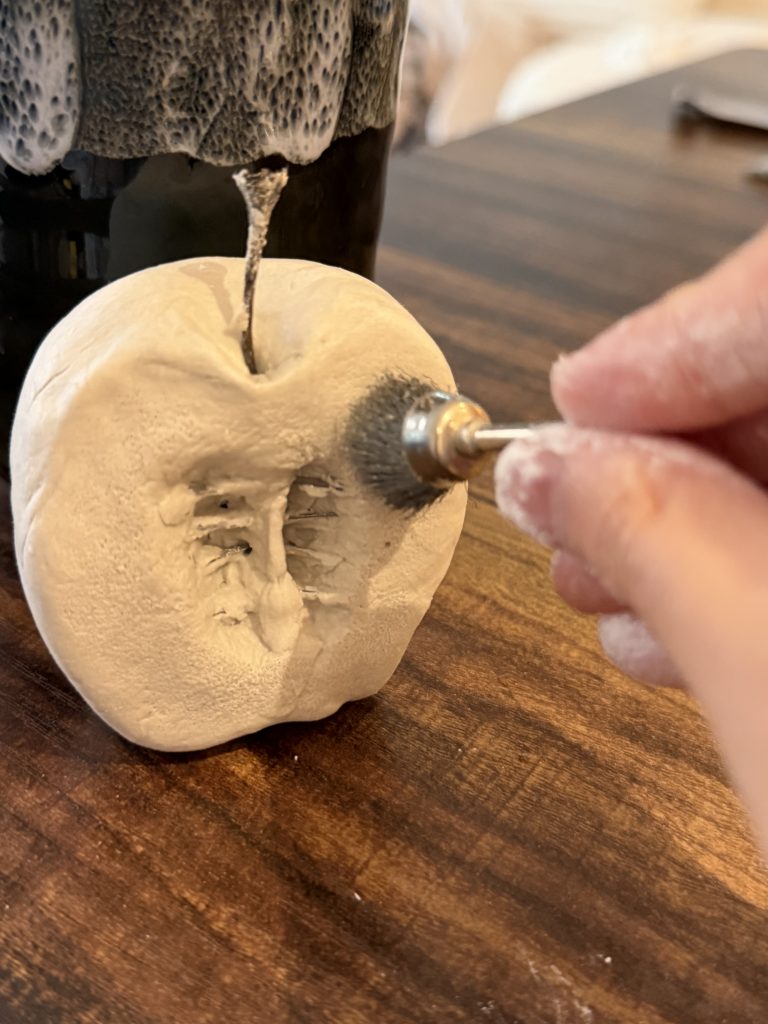
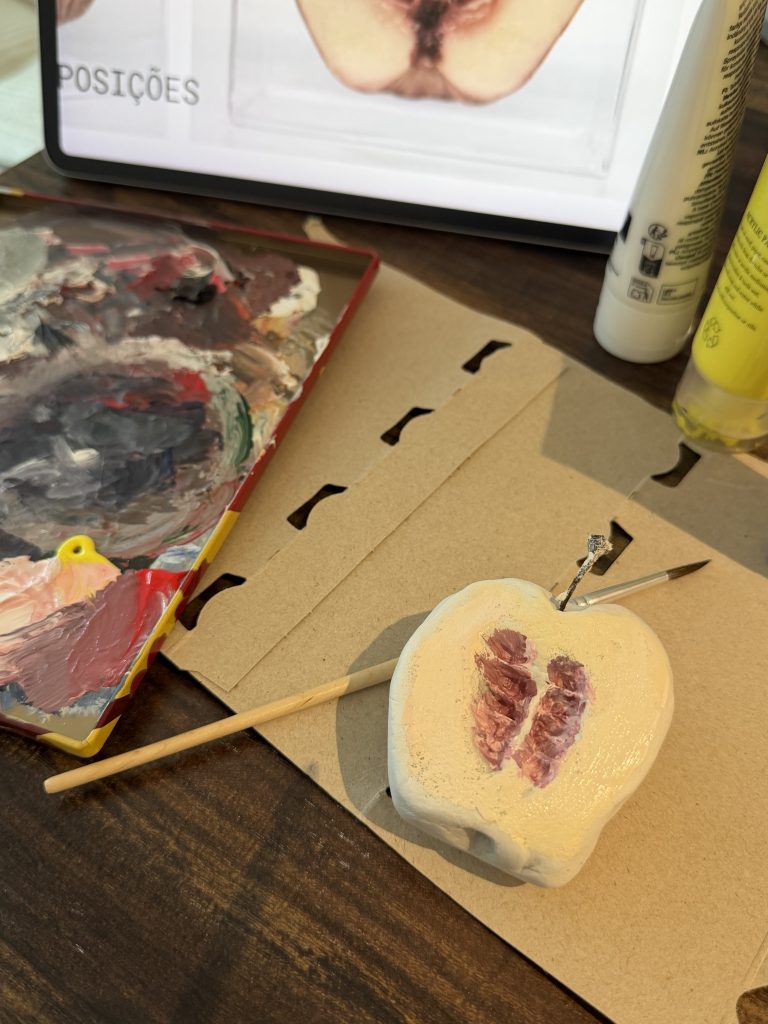
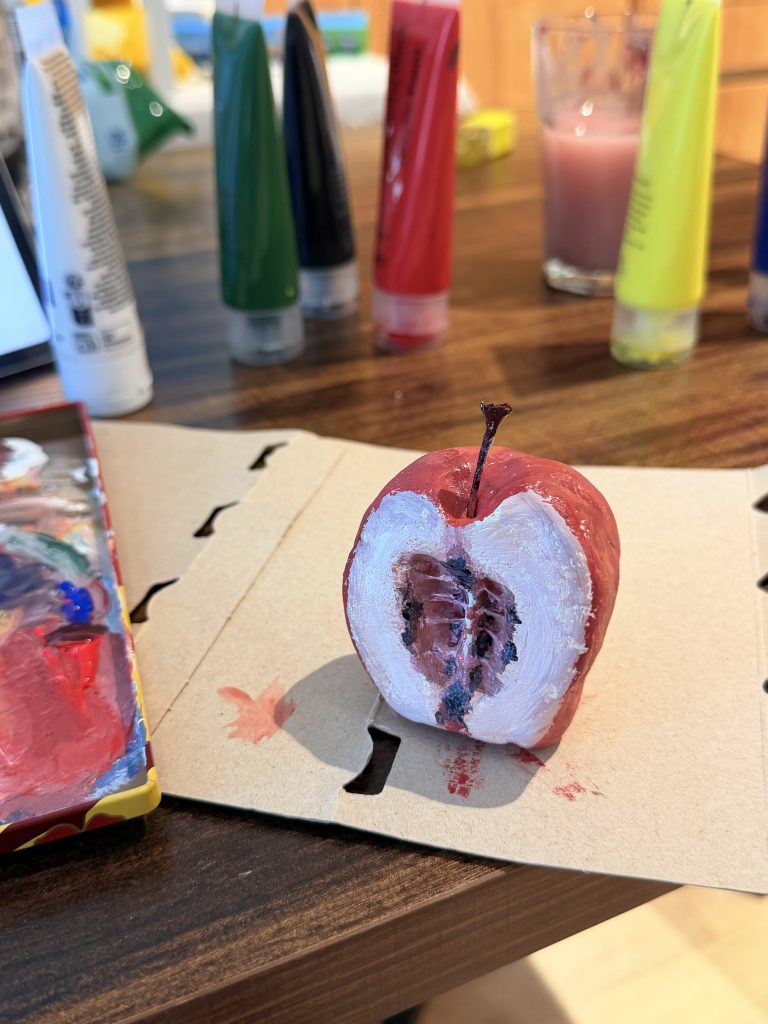
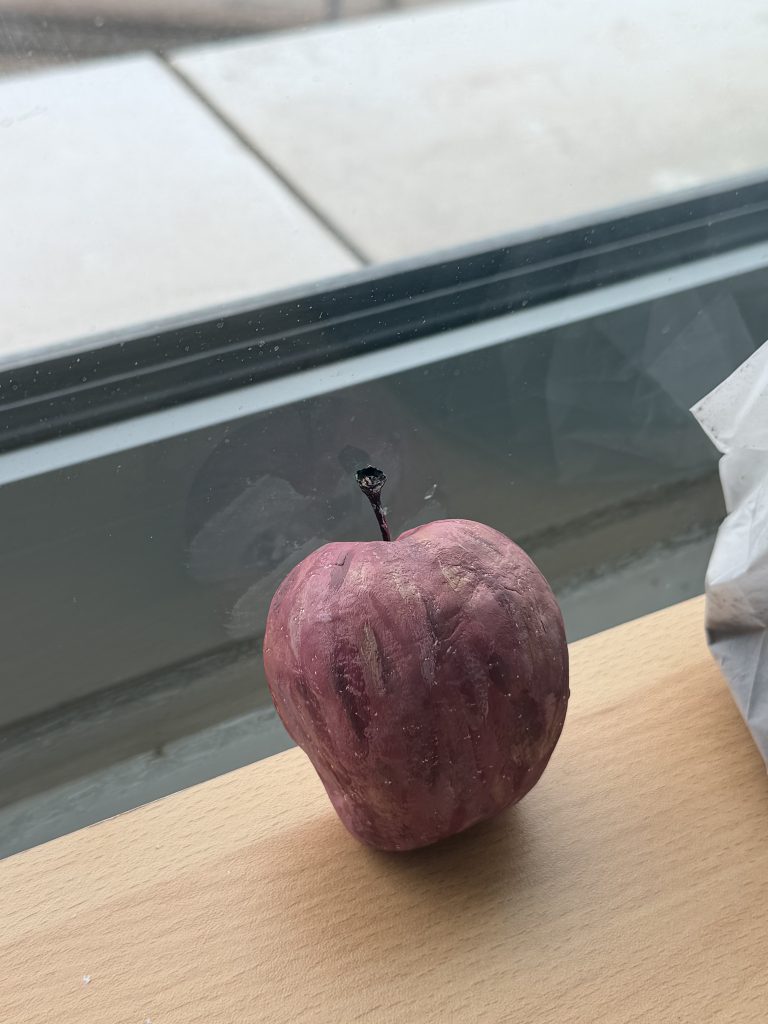
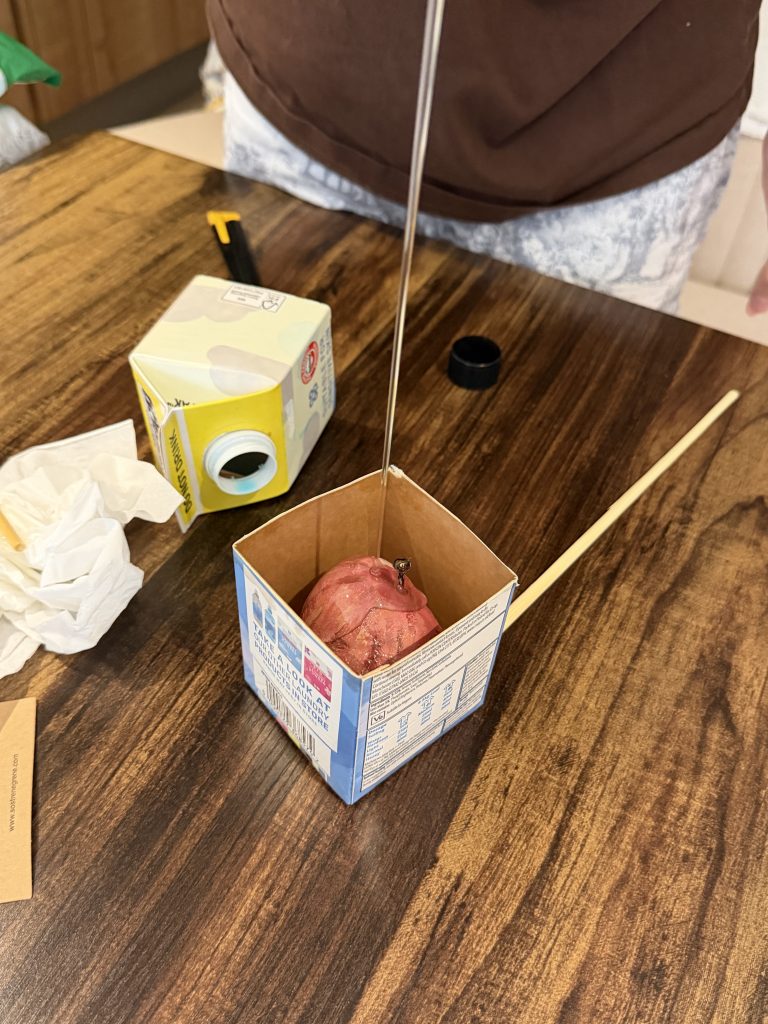
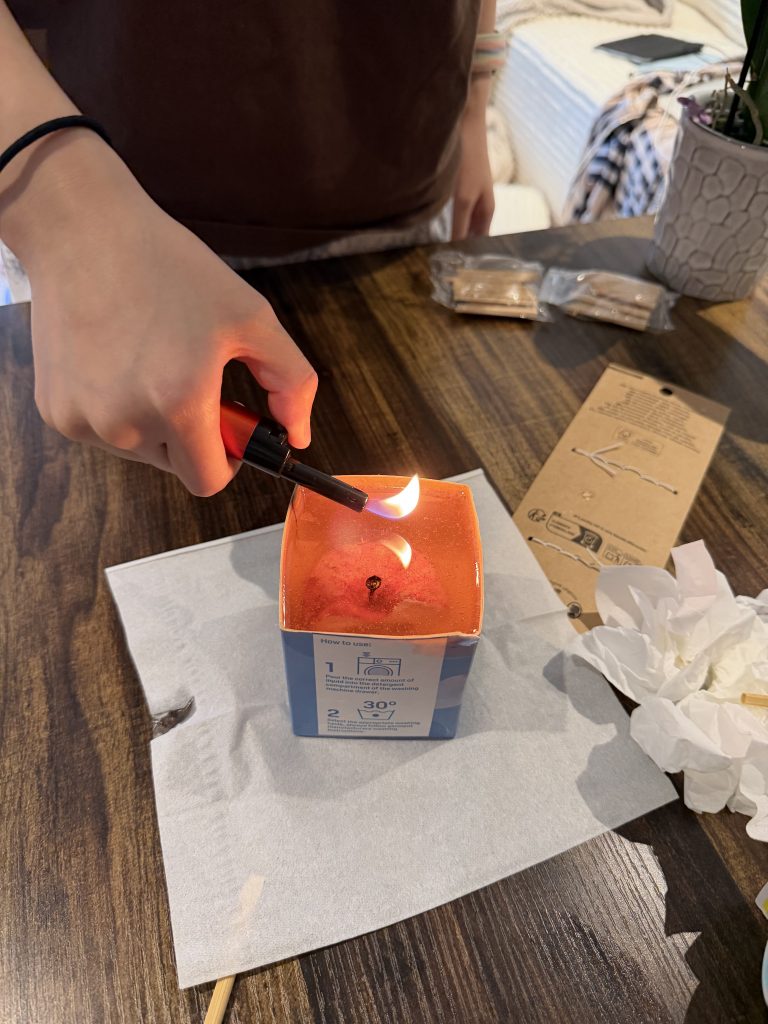
Through the experiment of copying works of art, I found that physical materials always have certain limitations. Just like when I use air-dry clay, I need to spend time waiting for it to dry. When it is not easy to shape, I will find items that can support it. The whiteness of the resin oil and the drip glue that can’t be dried will always have errors one by one. During this period, it takes a lot of time to experiment and make mistakes.
But when I use 3D modelling, I can undo the wrong steps with just a finger. As long as I am familiar with the toolbar, I can quickly copy many models. And AI Apple only needs a single prompt to quickly generate an art replica.
But tactile reality is defined by these physical defects, and we perceive the real world through these unpredictable resistances. Digital perfection is more like an illusion. It is through this erasing the limitations of physical materials in the physical world that it provides instant and flawless output.
Therefore, this experiment also exposes the boundary between the two. There is an essential difference between virtual and reality. Touch reality depends on physical resistance, while digital perfection can only exist when physical resistance is taken away.