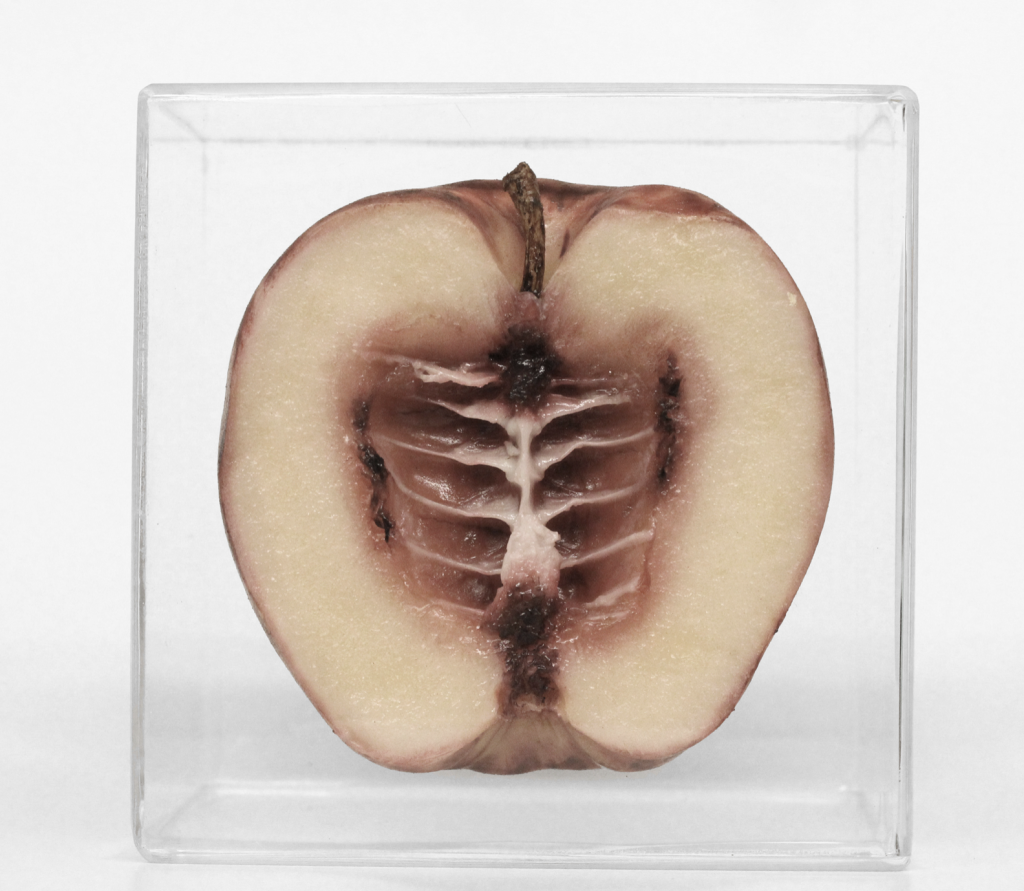
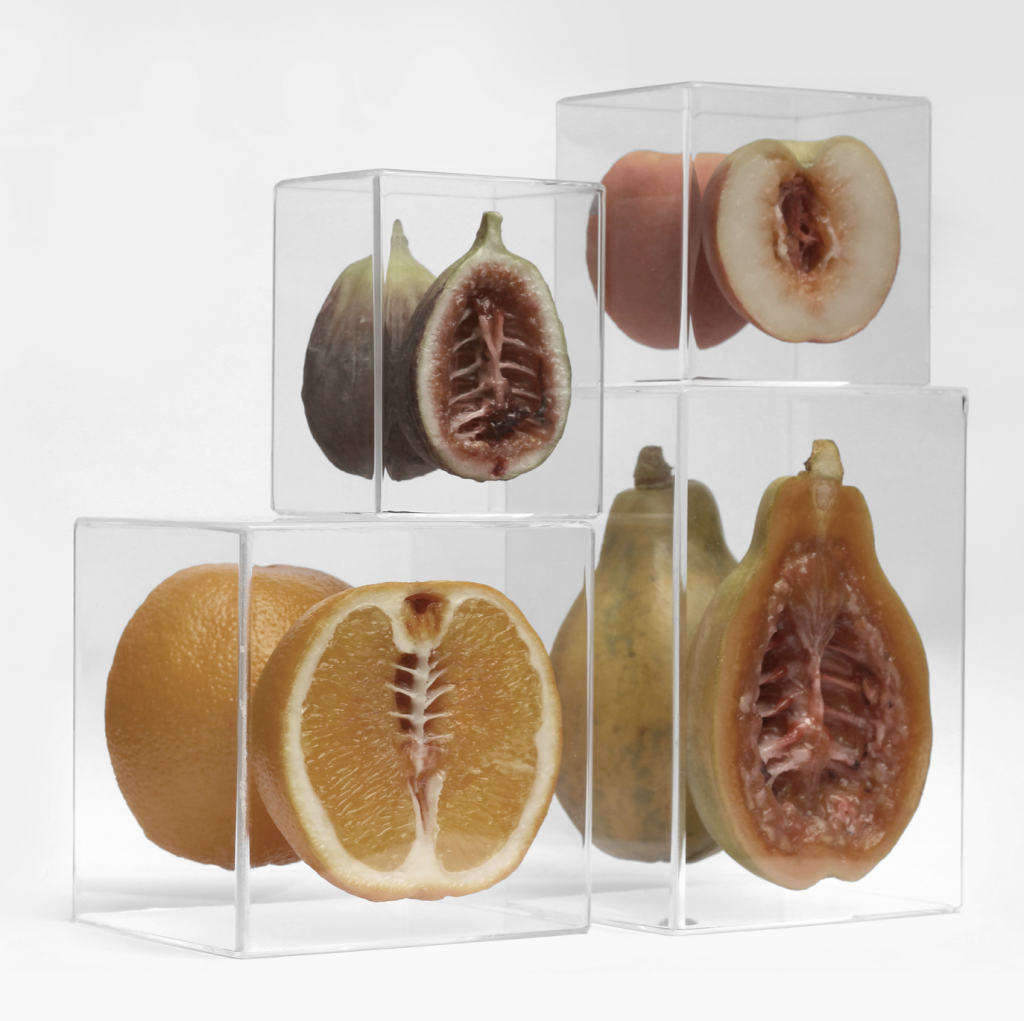
For this brief, I explored physical hand-sculpting using air-dry clay to remake Monica Piloni’s Séries Hybris. Her work investigates the alienating tension of everyday commodities by embedding animal anatomical structures—such as spines and ribs—inside the cross-sections of everyday fruits. While Piloni’s original works are crafted from vinyl and acrylic, I opted for clay because it is accessible, intuitive, and easy to handle for rapid prototyping.
Making Process:
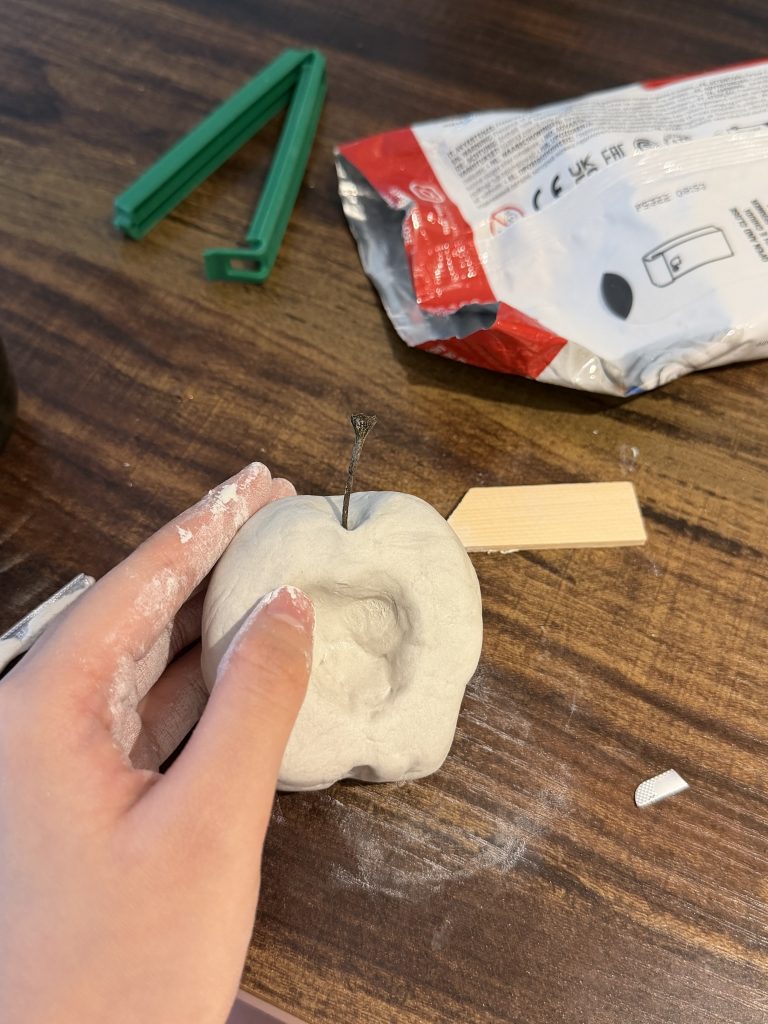
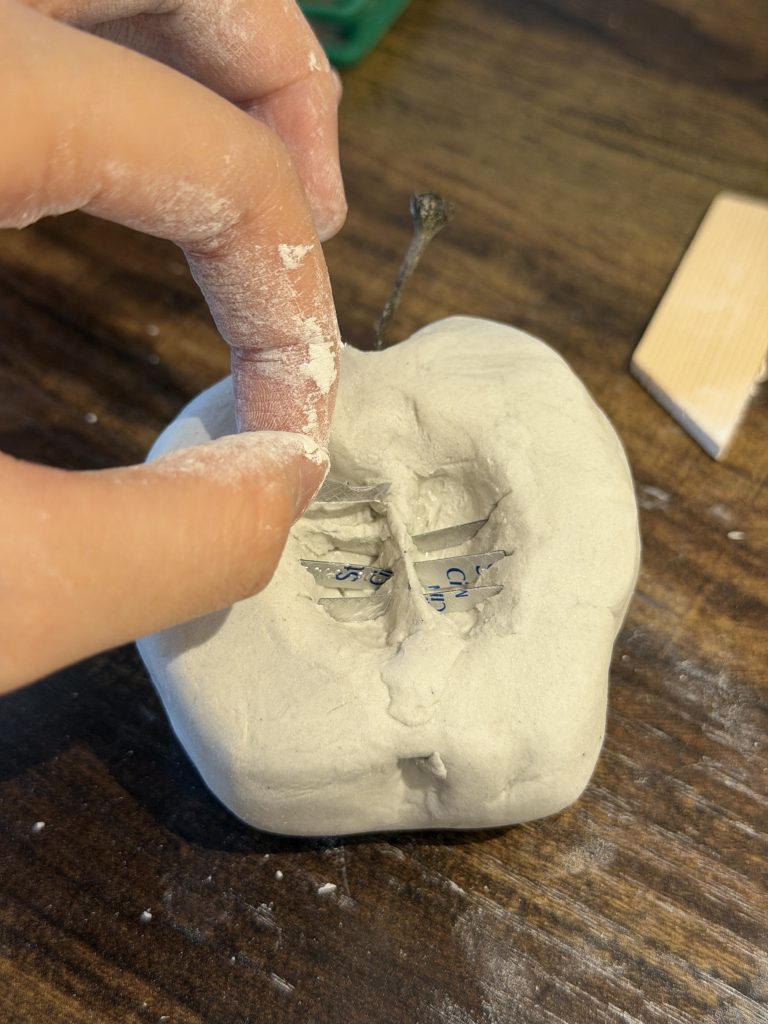
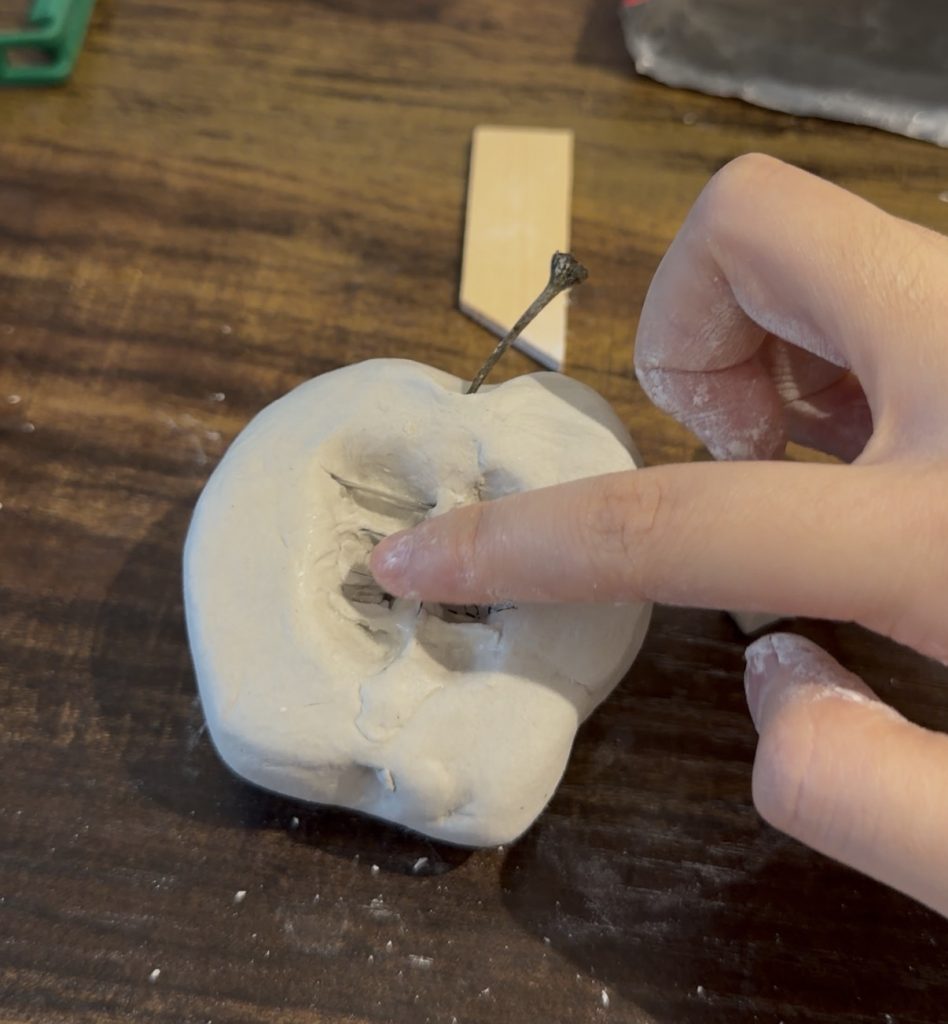
- Forming the Base: Sculpted the half-apple base using stone-plastic air-dry clay, hollowing out the central cavity for the anatomical structure.
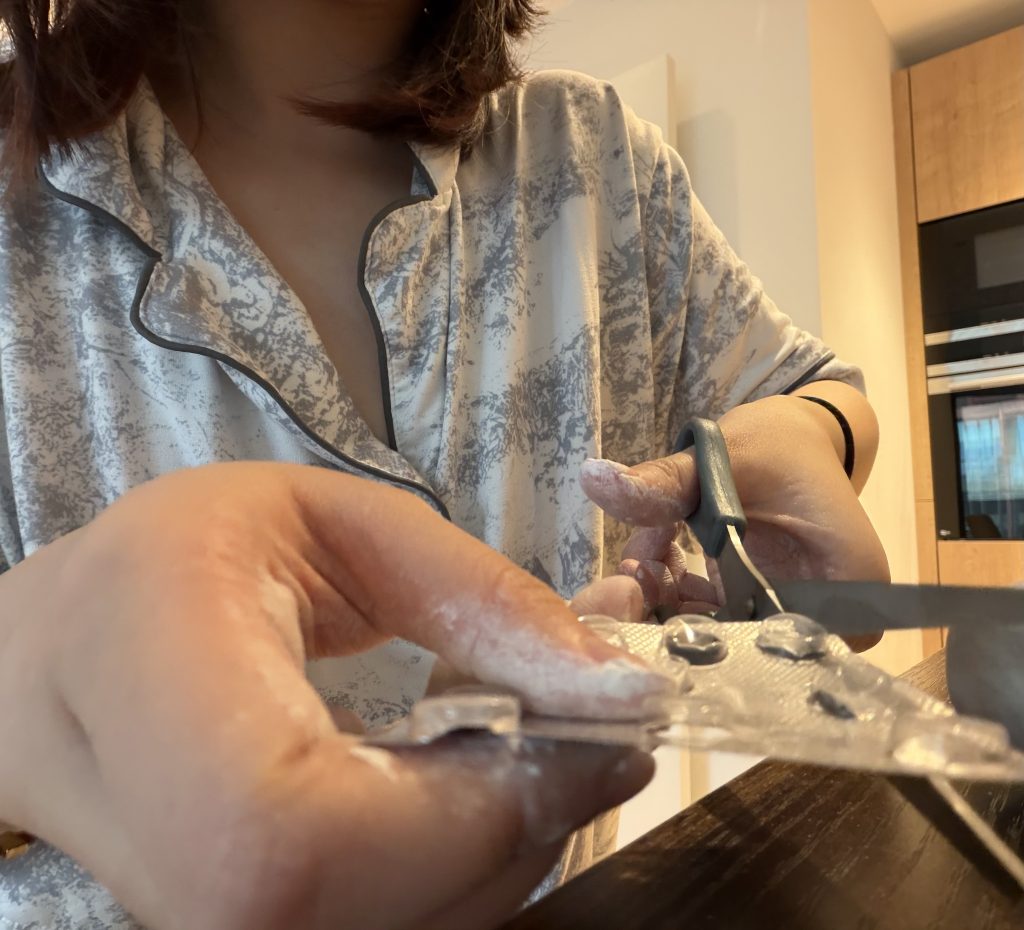
- Structuring the Skeleton: Cut up empty blister foil packaging to serve as an internal supportive armature, embedding it within the clay cavity and covering it with a fresh layer of clay to build a 3D bone/rib structure.
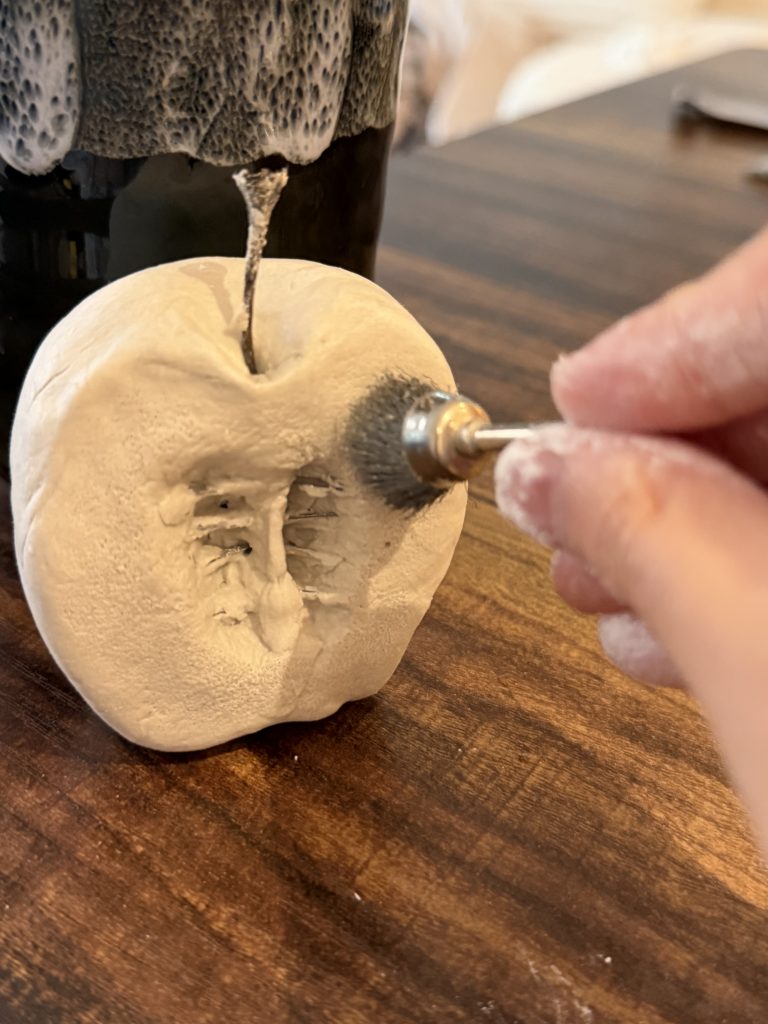
- Texturing the Surface: Used a miniature wire brush tool to stipple and carve details into the cross-section, capturing the organic, fibrous texture of the fruit pulp.
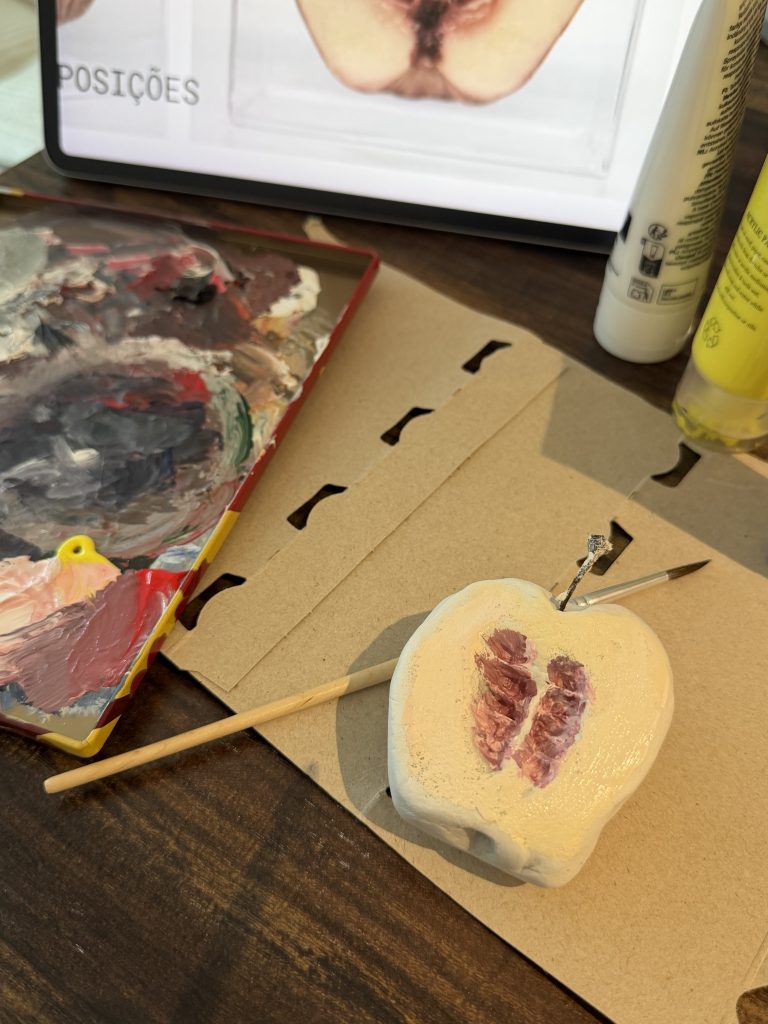
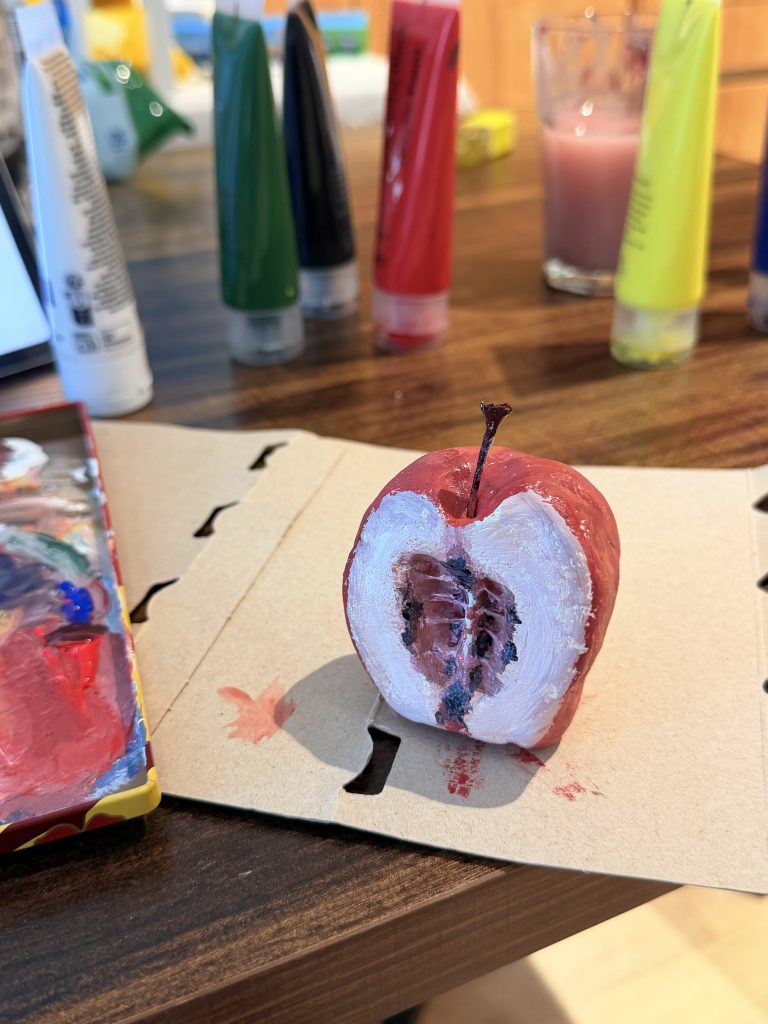
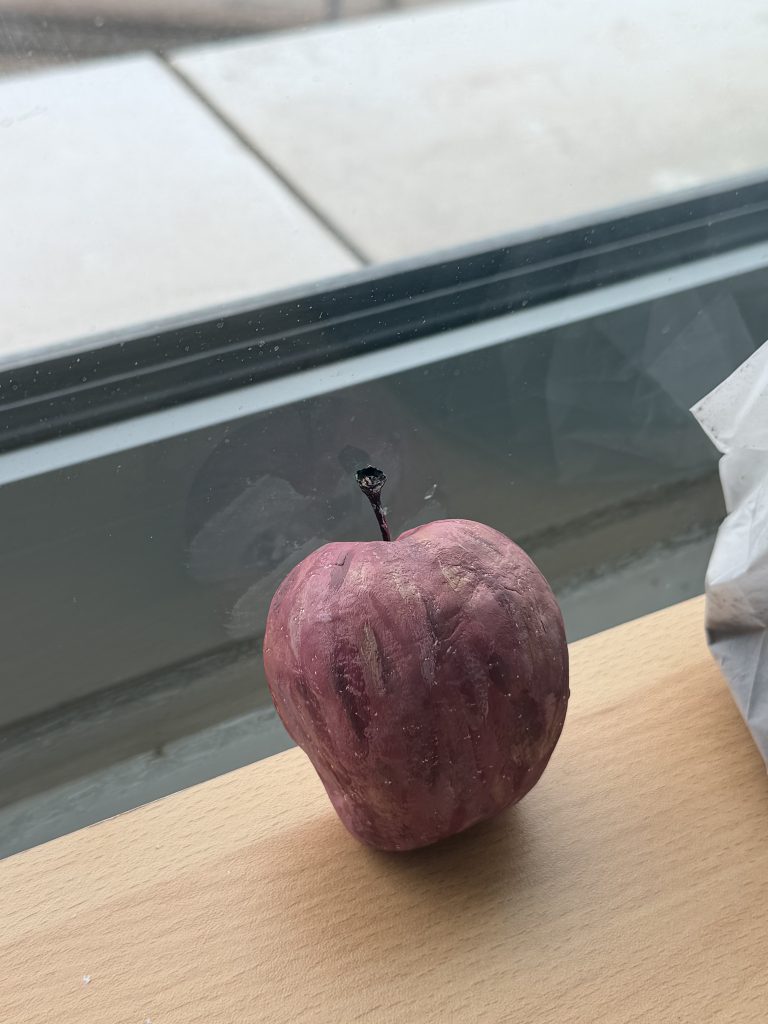
Once the sculpted clay model was fully air-dried, I applied acrylic paint to render the organic tones and surface details, followed by a final drying stage to lock in the finish.
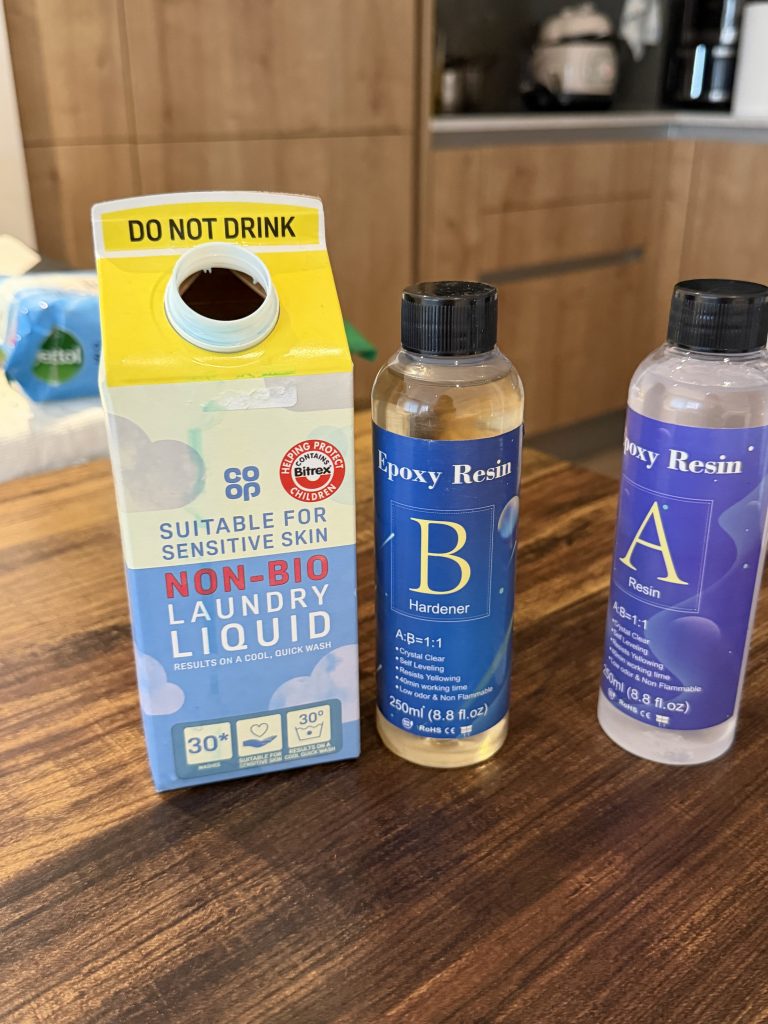
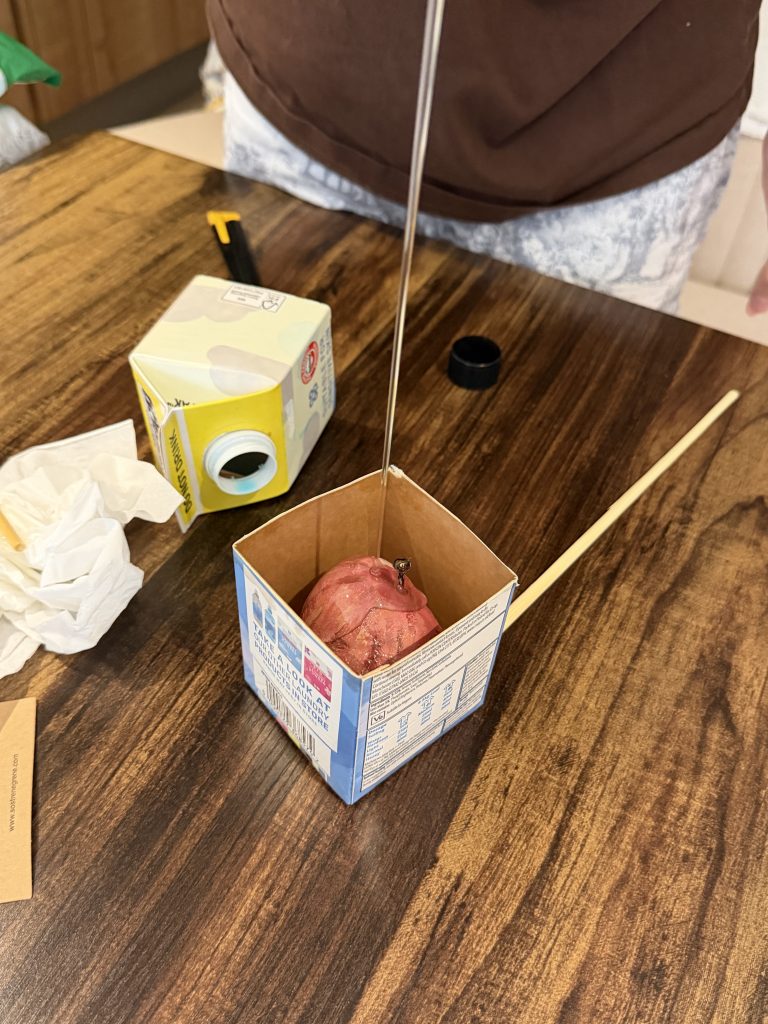
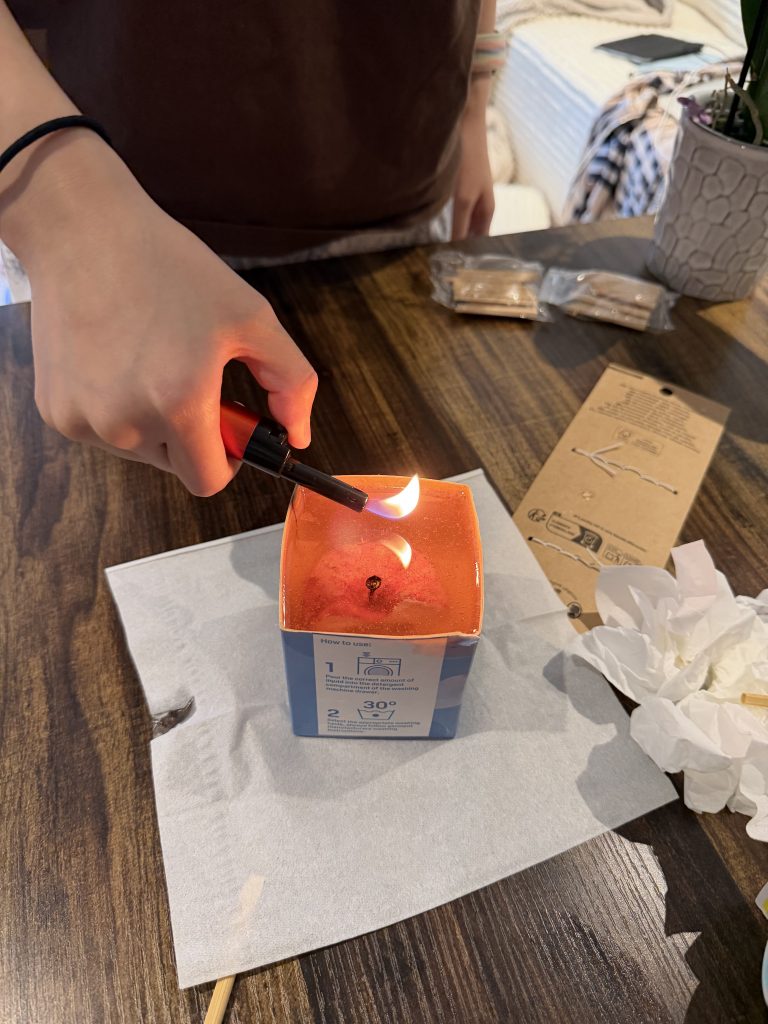
To replicate the transparent acrylic cube of the original work, I cut an empty laundry detergent bottle into a square shape to serve as a makeshift mold. After placing the painted clay sculpture inside, I poured mixed AB resin over it and used a flame to remove air bubbles from the surface, sealing the sculpture within a clear block.
Draft
The reproduction artwork I chose is “Séries Hybris” by Monica Piloni. Although Piloni’s original work uses Vinyl and Acrylic to achieve a cold and ultra-realistic effect, I deliberately chose clay and daily waste as easy-to-use media for quick physical prototype creation.
The handmade process reveals the distinct material limitations, and the soft clay is difficult to maintain structural accuracy, forcing me to rely on the temporary cut plate as an internal bone support. And it is difficult to restore the texture characteristics of real fruits by hand colouring. This raises a key question. How does the limitations of physical manufacturing expose the boundary between tactile reality and digital perfection?
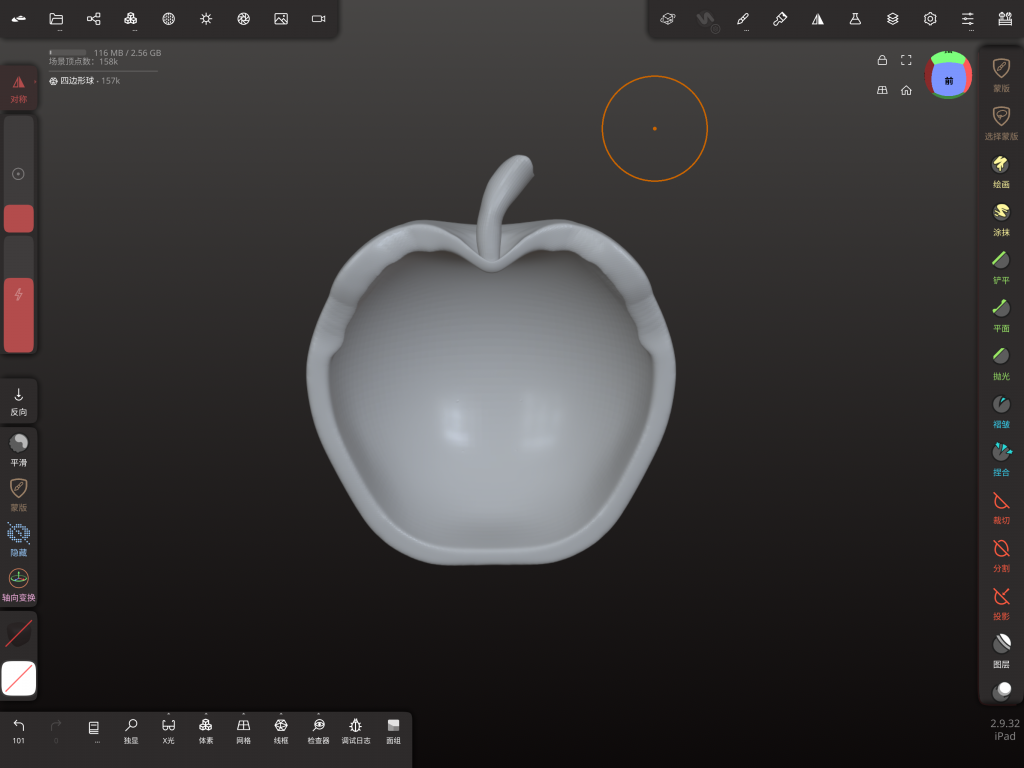
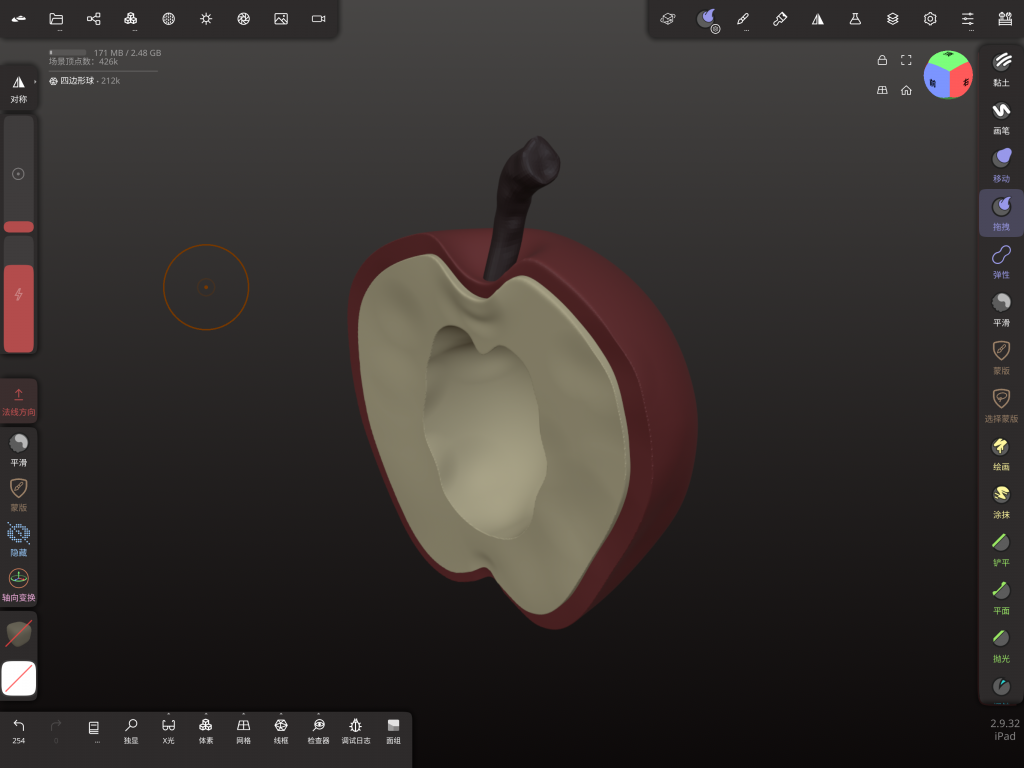
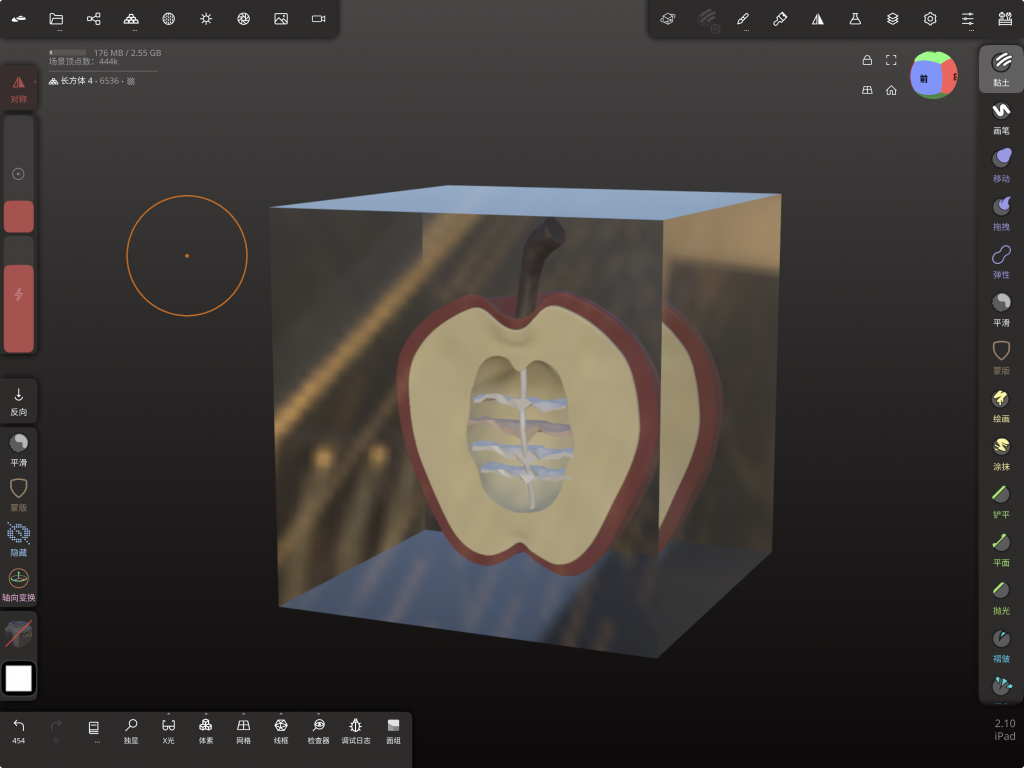
In order to further explore this point, the physical sculpture will be used as a tactile basis. In the next experiment, I am going to transform this prototype into 3D digital modelling. Entering the virtual space allows me to get rid of the limitations of physical materials and regain control of fine micro-details and complex geometric forms.
Leave a Reply